

Table of Contents
- Why Sourdough and Olive Oil Belong Together
- What Makes the Best Extra Virgin Olive Oil for Dipping Bread
- Mild vs Peppery Olive Oil for Dipping: Which Suits Your Bread
- Herbs and Spices for Olive Oil Dip
- A Simple Olive Oil Bread Dip Recipe
- How to Serve and Store Your Dipping Oil
- Conclusion
- Frequently Asked Questions
Last Updated: October 5, 2026
Why Sourdough and Olive Oil Belong Together
The best olive oil for dipping sourdough bread is a fresh, peppery extra-virgin oil with a clear harvest date, because sourdough's tang and chew need a bold partner.
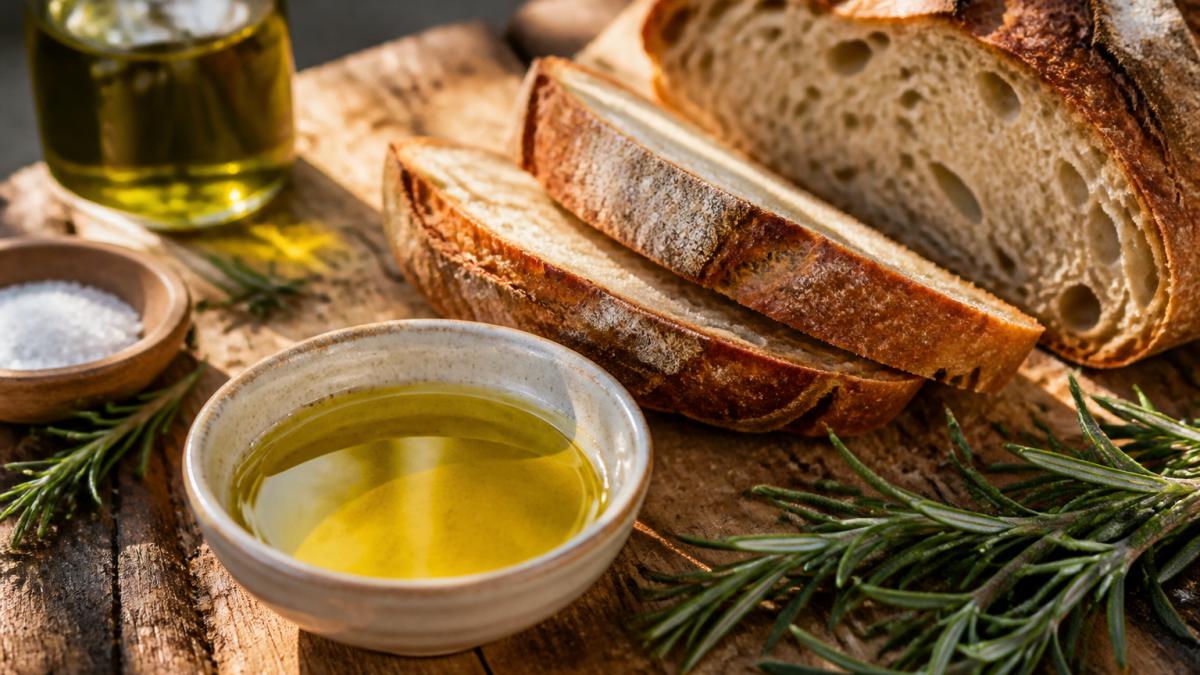
Sourdough is a slow bread. Wild yeast and time give it a tangy edge and a thick, crackly crust. A soft, neutral oil disappears against that.
Oils sold as "extra virgin" vary wildly in age and quality, and many sit on shelves for a year or more.
What Makes the Best Extra Virgin Olive Oil for Dipping Bread
The best extra virgin olive oil for dipping bread is pressed recently, stored away from heat and light, and bold enough to hold its own against a strong loaf. Freshness matters more than brand, price or packaging, but "fresh" is a claim, not a guarantee, so the useful skill is knowing which label signals you can verify.
Here is what to check before you buy:
- Harvest date, not just a best-before. A best-before date can sit two years out. A harvest date tells you when the fruit was picked.
- A single origin. Blends hide weak oil behind strong oil. Single-origin bottles let you taste one place, one season.
- Dark glass or a tin. Light breaks oil down. Clear bottles on a bright shelf are a warning sign.
- A peppery finish. That catch in your throat comes from natural polyphenols. It signals a young, lively oil.
Freshness and Harvest Date
Freshness is the single biggest factor in how an olive oil tastes. Oil is a fruit juice. It fades from the moment it is pressed.
Most supermarket oils are blended across seasons and countries, and taste flat because they are old.
Look for a harvest date within the last year; if the bottle only shows a best-before, treat that as a gap in information, not a guarantee.
How Extraction and Packaging Change What You Taste
Two bottles can carry the same harvest date and still taste completely different, because how the oil was made and stored both leave a mark.
Extraction. Most quality extra virgin oil is extracted by cold pressing or cold centrifugation, where the paste is spun rather than heated.
Packaging. The container is part of the recipe.
At Olio Nuovo, we press within 24 hours of harvest and offer both. Our seasonal Olio Nuovo release explains the difference in more detail.
Matching the Oil to Sourdough's Tang, Crust and Crumb
Sourdough is not one flavour. A pale, mild loaf and a dark, long-fermented rye behave differently in the mouth, and the oil should follow the bread, not your usual habit.
- Pale, mild sourdough. A gentle, buttery oil lets the crumb's soft lactic tang come through. A fierce peppery oil will bury it.
- Everyday crusty sourdough. A medium, fruity oil with green-apple and almond notes is the safe middle. It has enough character to meet the crust without fighting the tang.
- Dark, long-fermented or rye sourdough. A robust, peppery, herbaceous oil is the right partner. The bitterness and pepper cut through the loaf's deeper, almost bitter edge and stop the dip tasting flat.
The practical rule: the darker and more sour the loaf, the bolder the oil. If you only keep one bottle, a medium fruity extra virgin is the most flexible choice for sourdough dipping, and you can push toward peppery as your taste sharpens.
Mild vs Peppery Olive Oil for Dipping: Which Suits Your Bread
Mild olive oil suits delicate breads and hesitant palates, while peppery oil suits dark, tangy sourdough and confident tastes. Match the oil to the loaf, not to habit: a gentle oil on a strong sourdough gets lost, and a fierce oil overpowers a soft white roll.
Here is how the two styles behave at the table:
| Oil style | Tasting notes | Best with | Watch out for |
|---|---|---|---|
| Mild and buttery | Soft, round, low bitterness | White sourdough, focaccia, delicate loaves | Can taste flat on dark, tangy bread |
| Medium and fruity | Green apple, almond, gentle pepper | Everyday sourdough, warm crusty bread | Easy to over-pour |
| Peppery and herbaceous | Grassy, artichoke, strong pepper finish | Dark sourdough, rye, strong loaves | Too strong for mild breads |
If you are new to fresh oil, start in the middle. A fruity, medium-style oil works with almost any loaf. Then move toward peppery as your taste sharpens.
Herbs and Spices for Olive Oil Dip
Herbs and spices turn plain oil into a proper bread dip. The goal is balance: something green, something savoury, and a little bite.
Good additions include:
- Garlic, fresh or roasted, for a savoury base
- Rosemary, for a piney, aromatic lift
- Italian seasoning, for a ready-made herb blend
- Chilli flakes, for gentle heat
- Lemon zest, for a bright edge
- Flaky salt, added just before serving
Classic Combinations That Work
Some pairings have earned their place. These are the ones we reach for most:
Northern Hemisphere Harvest Olio Nuovo (December Delivery) →
- Garlic and rosemary. The classic. Warm, savoury and reliable.
- Italian seasoning and parmesan. Savoury, herby and rich.
- Chilli, garlic and lemon. Bright, tangy and a little hot.
- Basil and balsamic. Sweet, tangy and aromatic.
A splash of balsamic vinegar adds tang and depth but darkens the oil, so add it at the end and taste as you go. Fresh herbs give a brighter flavour, dried herbs a deeper one; both work.
Variations for Different Diets and Needs
Most dipping-oil recipes assume garlic, parmesan and balsamic suit everyone at the table. They do not, but each can be swapped without losing the point of the dip.
- Garlic-free. Roasted garlic is the usual culprit for anyone avoiding alliums. Replace it with a pinch of asafoetida, finely chopped chives, or lean harder on rosemary and lemon zest. The dip still tastes savoury rather than flat.
- Dairy-free. Parmesan is the common dairy addition. Nutritional yeast gives a similar savoury, nutty note, and a teaspoon of white miso adds depth without dairy. Both dissolve into the oil rather than sitting on top.
- Low-sodium. Flaky salt is easy to overdo because the flakes are large and uneven. Add it in small pinches, tasting between each one, or leave it out and let guests season their own slice. Herbs, lemon zest and a little vinegar carry flavour without sodium.
- Balsamic-free. Balsamic is sweet and dark, and some people avoid it for the sugar or the colour. A squeeze of lemon juice or a few drops of red wine vinegar gives the same tang without the sweetness or the dark swirl.
- Nut-free. If you use a nut oil or a nut-based garnish, check the label. Plain extra virgin olive oil with herbs is naturally nut-free.
A useful pattern: build the base dip plain, then set out optional extras in small bowls, so one batch of oil serves everyone and each guest finishes their portion to suit their needs.
How Each Addition Changes the Oil
It helps to know what each ingredient does, so you can adjust rather than follow a recipe blindly.
- Fresh garlic adds sharp heat and aroma, but shortens the safe storage window. Garlic in oil is best made and eaten the same day.
- Roasted garlic is sweeter and softer, blending into the oil rather than sitting on top.
- Dried herbs need a few minutes to rehydrate and release their flavour, so add them and let the bowl rest before serving.
- Fresh herbs give a brighter, greener lift, but bruise and darken if left too long.
- Acid (vinegar or lemon) cuts the oil's richness and makes the dip taste lighter. Add it last, because it dulls the aroma of the herbs.
- Salt does not just season; it makes the fruitiness of the oil read more clearly. Under-salted dip tastes flat even when the oil is good.
A Simple Olive Oil Bread Dip Recipe
This olive oil bread dip recipe takes about five minutes and needs no cooking, the one we make when guests arrive and the bread is still warm.
You will need:
- 120 ml fresh extra-virgin olive oil
- 2 cloves garlic, finely grated
- 1 sprig fresh rosemary, leaves chopped
- 1 tsp Italian seasoning
- 1 tsp balsamic vinegar
- Flaky salt and cracked pepper
Method:
- Pour the oil into a shallow bowl.
- Add the garlic, rosemary and Italian seasoning.
- Stir in the balsamic vinegar.
- Season with salt and pepper.
- Rest for 10 minutes so the flavours combine.
- Serve with warm, thick-cut sourdough.
That serves four. Scale it up for a crowd, and set out a second bowl without the chilli for anyone who wants it plain.
How to Serve and Store Your Dipping Oil
Serve dipping oil in a shallow bowl, slightly warm, with bread cut thick enough to hold the oil.
A few practical rules:
- Serve 2 to 3 tablespoons per person. A little goes a long way with a bold oil.
- Warm the bread, not the oil. Heat the loaf, then pour the oil fresh.
- Keep the bottle closed. Oxygen fades the flavour over time.
- Use a small jug. Pour from it rather than dipping directly into the bottle.
- Finish within six months if the oil is unfiltered.
That last point matters for anyone buying a large tin. If you cook often, a 2 litre tin makes sense. If you only dip on weekends, a 500 ml bottle will stay fresher.
For anyone weighing up whether a premium oil is worth it, the answer is in the glass. Fresh oil tastes different. That is the whole test.
Conclusion
Choosing the best olive oil for dipping sourdough bread comes down to freshness, a clear harvest date, and matching the oil's character to your loaf.
At Olio Nuovo, we press within 24 hours of harvest to keep that freshness intact. Our oil is unfiltered, rich in antioxidants and vitamins A, D, E and K, and high in monounsaturated fats.
Order online now and taste what fresh, single-origin oil does for a warm slice of sourdough.
Frequently Asked Questions
Which olive oil is best for sourdough bread?
The best olive oil for dipping sourdough is a fresh, extra-virgin olive oil with a robust flavour. Look for one pressed within 24 hours of harvest, as this preserves the peppery, grassy notes that complement sourdough's tang. Unfiltered oil adds a rustic character. Olio Nuovo's Northern Hemisphere Harvest Olio Nuovo, pressed within 24 hours and bottled fresh, is an excellent choice for dipping.
What herbs and seasonings go well in olive oil for sourdough?
Classic additions include minced garlic, chopped rosemary, thyme, oregano, and a pinch of chilli flakes. Italian seasoning blends work well. For a tangy twist, add a splash of balsamic vinegar. Fresh herbs like basil or parsley also brighten the oil. Start with a neutral base like extra-virgin olive oil and adjust to taste. A simple mix of garlic, rosemary, and sea salt is a reliable starting point.
Should you use extra virgin olive oil for dipping bread?
Yes, extra-virgin olive oil is the best choice for dipping because it is unrefined and retains its natural flavours and antioxidants. Its robust taste stands up to sourdough's tang. Regular olive oil lacks the same depth. For the best experience, choose a fresh, high-quality extra-virgin oil. Olio Nuovo's unfiltered extra-virgin oil, pressed within 24 hours, delivers a vibrant, peppery character ideal for dipping.
How do you make a simple olive oil dip for sourdough bread?
Combine 120 ml of extra-virgin olive oil with one minced garlic clove, one teaspoon of chopped fresh rosemary, and a pinch of sea salt in a shallow bowl. Let it sit for 10 minutes for the flavours to meld. For a tangy version, add a teaspoon of balsamic vinegar. Serve with warm, sliced sourdough. This recipe takes five minutes and highlights the oil's freshness.
