

Table of Contents
- Why Premium Olive Oil Is Better for Cooking: The Basics
- Oxidative Stability vs. Smoke Point: What Actually Matters
- Health Benefits That Survive the Heat
- Flavour, Sensory Degradation and Culinary Applications
- How to Store Premium Olive Oil for Freshness
- Cost-Per-Use: Is Premium Olive Oil Worth It?
- Frequently Asked Questions
Last Updated: September 28, 2026
Why Premium Olive Oil Is Better for Cooking: The Basics
Premium olive oil is an extra virgin olive oil produced to a higher standard than mass-market bottles: pressed within hours of harvest, left unfiltered, and handled so its natural compounds survive the journey to your kitchen. This guide from Olio Nuovo explains what separates it from supermarket oil, why oxidative stability matters more than smoke point, and how to get real value from every bottle.

The difference starts at the grove. Olives destined for premium oil are picked early, when polyphenol levels peak, and pressed fast. Fruit that sits in bins for days before processing has already begun to degrade, and no amount of careful bottling can reverse that.
Three factors decide whether an olive oil performs in the pan:
- Freshness at pressing, the shorter the gap between harvest and mill, the more antioxidants remain intact
- Extraction method, cold pressing preserves compounds that heat and chemical solvents destroy
- Storage and handling, light, heat and oxygen degrade oil faster than any cooking method
Most supermarket bottles fail at least two of these before they reach the shelf.
Extra Virgin vs. Regular Olive Oil
Extra virgin olive oil is oil extracted from olives using only mechanical means, with no chemical processing and no refinement. It must meet strict chemical and sensory standards, including low free acidity and a clean, fruity taste with no defects.
Regular olive oil, sometimes labelled "pure" or "light," is a blend of refined oil and a small proportion of virgin oil. Refining strips out the compounds that make olive oil distinctive: the polyphenols, the tocopherols, the peppery finish. What's left is a neutral, shelf-stable fat with a longer best-before date and far less character.
For cooking, that trade-off matters. The compounds removed during refining are the same ones that protect the oil from breaking down under heat. Regular olive oil starts with less protection, so it has less to lose.
Extraction Methods: Cold Pressed vs. Refined
Cold pressing is mechanical extraction at controlled temperatures, typically kept low enough that the oil's delicate compounds survive intact. No heat is applied beyond what friction generates, and no solvents are used at any stage.
Refined olive oil takes the opposite path. Producers use heat, pressure and chemical solvents to extract every last drop from the fruit and paste, then deodorise and bleach the result to remove off-flavours. The yield is higher and the cost lower. The nutritional content is not.
Cold-pressed extra virgin oil keeps its organoleptic properties: the aroma, the bitterness, the green colour, the peppery catch at the back of your throat. Those aren't decorative details. Bitterness and pepperiness are sensory markers of polyphenol content, which is exactly what you want in a cooking oil.
Oxidative Stability vs. Smoke Point: What Actually Matters
Oxidative stability is the oil's resistance to breaking down and forming harmful compounds when exposed to heat, light and oxygen over time. It matters more than smoke point for anyone choosing a cooking oil, and most guides get this backwards.
Smoke point tells you the temperature at which an oil visibly begins to smoke. It's a single threshold, measured in a lab under controlled conditions. Oxidative stability is a spectrum: how long the oil resists degradation before, during and after heating.
Here's what most guides miss. An oil with a high smoke point but poor oxidative stability will still form aldehydes and other breakdown products during a long sauté, even if it never visibly smokes. The smoke is a symptom, not the mechanism.
The Smoke Point of Extra Virgin Olive Oil
The smoke point of extra virgin olive oil sits comfortably within normal cooking ranges. Frying, sautéing, roasting and grilling all happen well below the point where a good extra virgin oil starts to smoke.
The persistent claim that extra virgin olive oil is unsuitable for high-heat cooking traces back to outdated figures and poor-quality samples. Fresh, well-made oil holds up. Old, badly stored oil does not, and that's the variable people actually notice.
If your oil smokes early, the problem is usually age or storage, not the category.
Polyphenols, Tocopherols and Heat Resistance
Polyphenols and tocopherols are the antioxidant compounds that give extra virgin olive oil its heat resistance. Polyphenols neutralise free radicals as they form; tocopherols, a family that includes vitamin E, slow the oxidation process itself.
Northern Hemisphere Harvest Olio Nuovo →
An oil rich in these compounds degrades more slowly under heat. That means fewer breakdown products in your food and better flavour retention through the cooking process.
This is the practical case for premium oil in the pan. You aren't paying for a luxury label. You're paying for a higher starting concentration of the compounds that do the protective work, pressed and bottled before those compounds fade.
Health Benefits That Survive the Heat
Cooking does reduce some beneficial compounds in olive oil, but a well-made extra virgin oil retains meaningful nutritional value even after heating. The key variable is what the oil started with.
Monounsaturated Fats and Heart Health
Monounsaturated fats, with oleic acid as the dominant type, make up the bulk of olive oil's fat profile. Diets built around these fats rather than saturated fats are associated with healthier cholesterol levels and better cardiovascular outcomes.
Heat doesn't destroy oleic acid. The fatty acid structure is stable at cooking temperatures, so the heart-healthy fat profile survives frying and roasting intact. What heat affects is the minor compounds, not the fat itself.
Antioxidants, Free Radicals and Lipid Peroxidation
Lipid peroxidation is the chain reaction where fats react with oxygen and break down into free radicals and secondary compounds. It's what makes old oil smell like crayons and taste flat.
Antioxidants interrupt that chain. A premium extra virgin oil, pressed fresh and left unfiltered, carries a deeper reserve of polyphenols and tocopherols to draw on. It resists peroxidation for longer, both in the bottle and in the pan.
The peroxide value on a lab report measures how much oxidation has already occurred. Lower is better, and it's one of the clearest indicators of how an oil was handled before it reached you.
Flavour, Sensory Degradation and Culinary Applications
Flavour compounds are volatile, and heat drives them off. That's why the same oil behaves so differently as a frying medium and as a finishing drizzle.
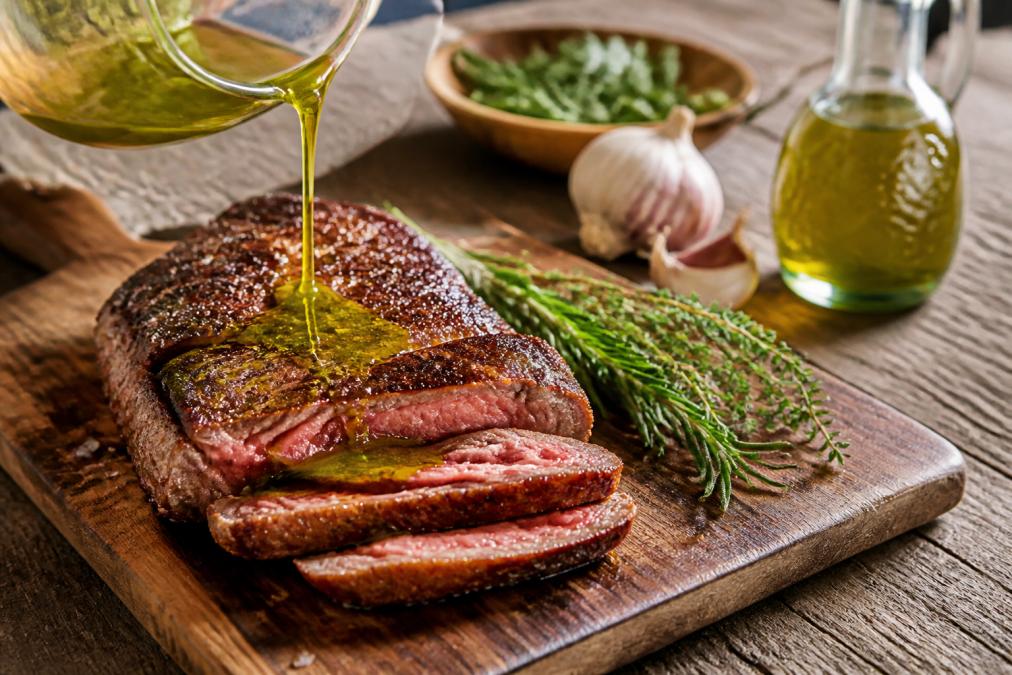
Frying, Sautéing and Finishing
Match the oil to the job:
- Frying and searing: use a strong, peppery extra virgin oil. High polyphenols, strong flavour, holds up to sustained heat
- Sautéing: a medium-intensity oil works well. Enough character to season the pan, enough stability for a few minutes of heat
- Finishing: this is where premium oil earns its place. Uncooked, every aroma compound reaches the plate intact
The finishing role is the one most home cooks underuse. A drizzle of fresh, unfiltered oil over a finished dish adds a vivid, green fragrance that no heated oil can replicate.
Best Olive Oil for Finishing Steak and Red Meat
The best olive oil for finishing steak and red meat is a fresh, peppery extra virgin oil applied off the heat, after resting. Heat destroys the compounds you're paying for, so add it at the end.
How to Store Premium Olive Oil for Freshness
Heat, light and oxygen are the three enemies of olive oil, and storage decides how much of your bottle's quality survives to the last pour. Get this right and a good oil stays good for months.
Cost-Per-Use: Is Premium Olive Oil Worth It?
Premium olive oil costs more per bottle, but the honest comparison is cost per use, not cost per litre. That reframing changes the maths considerably.
| Use case | What matters most | Best choice |
|---|---|---|
| Everyday frying | Oxidative stability, flavour to spare | Strong extra virgin |
| Sautéing and roasting | Balance of stability and character | Medium-intensity extra virgin |
| Finishing steak and red meat | Aroma compounds, freshness | Fresh, peppery extra virgin |
| Salads and dressings | Brightness, polyphenol content | Unfiltered seasonal oil |
Frequently Asked Questions
Which type of olive oil is best for cooking?
Extra virgin olive oil is the best choice for most cooking, including frying and sautéing. Its high polyphenol content and monounsaturated fats make it resistant to heat, and it adds flavour. For finishing, a fresh, peppery premium olive oil like Olio Nuovo, pressed within 24 hours of harvest, delivers the most vibrant taste. Avoid refined or light olive oils, which lack antioxidants and flavour.
Is it better to use extra virgin olive oil for high-heat cooking?
Yes. Despite its lower smoke point compared to refined oils, extra virgin olive oil's oxidative stability means it produces fewer harmful compounds when heated. Studies show it outperforms many refined oils in frying tests. For high-heat cooking, use a premium extra virgin olive oil and keep temperatures below 200°C to preserve flavour and nutrients.
How does the harvest date affect the quality of olive oil?
Harvest date is a key indicator of freshness. Olive oil is a fruit juice, and its polyphenols and antioxidants degrade over time. Oil pressed within 24 hours of harvest, like Olio Nuovo, retains peak flavour and health benefits. Supermarket oils may be 12-18 months old. Always check for a harvest date, not just a best-before date.
What are the health benefits of choosing premium extra virgin olive oil?
Premium extra virgin olive oil is rich in monounsaturated fats, which support heart health by improving cholesterol levels. Its polyphenols and tocopherols act as antioxidants, reducing free radicals and inflammation. Unfiltered oils like Olio Nuovo also contain vitamins A, D, E and K. These benefits are highest in cold-pressed, unrefined oils.
