

Last Updated: November 8, 2026
Quick Summary
For olive oil for dipping, choose unfiltered if you want a bolder, thicker oil with more olive pulp flavour, or filtered if you prefer a cleaner, more balanced pour. Filtration is a finishing step, not a quality grade, so freshness and an extra virgin grade matter more than whether the oil is cloudy or clear.
- Unfiltered oil is bottled with fine olive pulp and sediment still suspended in it.
- Give an unfiltered bottle a gentle swirl before pouring so the sediment is evenly distributed.
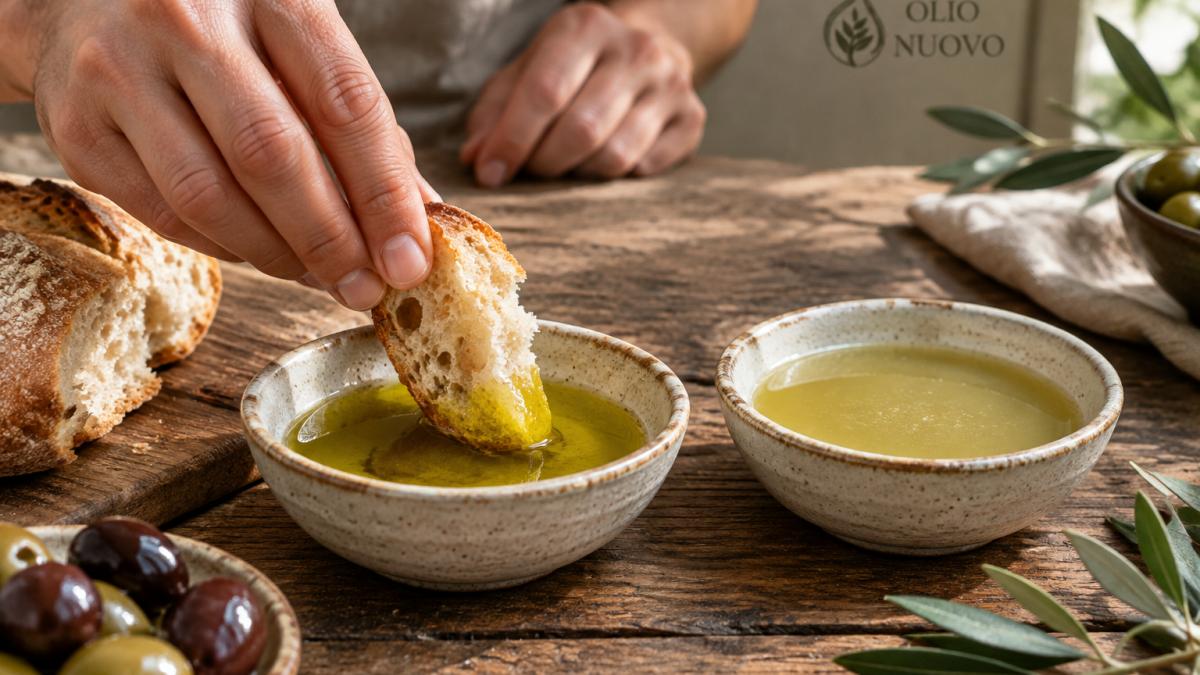
- Pour about two tablespoons per person into a small, shallow bowl for a shared starter.
- Harvest date is the single most useful thing on an olive oil label when choosing for dipping.
- Use opened oil within a few months for the best flavour.
Table of Contents
- What Filtered and Unfiltered Olive Oil Actually Mean
- Cloudiness, Sediment and Appearance in the Dipping Bowl
- Flavour, Aroma and Mouthfeel: What Changes With Filtration
- Choosing the Best Olive Oil for Dipping Bread
- How Olive Oil Harvest Date Shapes Dipping Flavour
- How to Store Unfiltered Olive Oil So It Stays Fresh
- A Simple Olive Oil Dipping Sauce Recipe to Try
- Order Fresh Harvest Olive Oil for Your Next Loaf
- Frequently Asked Questions
What Filtered and Unfiltered Olive Oil Actually Mean
Unfiltered vs filtered olive oil for dipping bread comes down to one choice: whether the tiny olive particles stay in the bottle or get removed before it reaches you. Both are real extra virgin olive oil. Neither is automatically better.
Unfiltered olive oil is bottled with fine olive pulp and sediment still suspended in it. Filtered olive oil has those particles removed, usually by passing the oil through a fine mesh or a cellulose filter.
Olio Nuovo presses within 24 hours of harvest and offers both filtered and unfiltered styles.
How filtration changes the oil, not the grade
Filtration is a finishing step, not a quality grade. An oil can be filtered or unfiltered and still be extra virgin. The grade depends on how the olives were grown and pressed, not on whether the particles were strained out.
Filtering removes sediment. It does not fix a bad oil or downgrade a good one.
For the full side-by-side, see our guide to unfiltered olive oil vs filtered.
Cloudiness, Sediment and Appearance in the Dipping Bowl
Cloudy oil is normal in an unfiltered bottle. The haze comes from suspended olive particles, and it often settles into sediment at the bottom over time.
A filtered oil pours clear and bright. An unfiltered oil can look almost opaque, especially in the first months after pressing.
Neither look tells you the oil is spoiled. If you want to understand the haze before you serve it, our explainer on why olive oil is cloudy covers the causes.
One practical note for the table: give an unfiltered bottle a gentle swirl before pouring. The sediment is part of the oil, not a fault.
Flavour, Aroma and Mouthfeel: What Changes With Filtration
Unfiltered oil usually tastes bolder, and the difference is most obvious on plain bread. The suspended particles carry olive pulp flavour, so the oil reads as greener, more herbal and more intense. Filtered oil tastes cleaner and more balanced. The fruitiness is still there, but the edges are softer.
Here is how the two compare in the bowl:
| Trait | Unfiltered | Filtered |
|---|---|---|
| Appearance | Cloudy, can settle | Clear and bright |
| Aroma | Grassy, pungent | Bright, rounded |
| Mouthfeel | Thicker, slightly textured | Smooth and light |
| Bitterness | Often more pronounced | Milder |
| Peppery finish | Can linger longer | Finishes quicker |
| Best for | Bold dipping, finishing | Balanced dipping, all-round use |
Why unfiltered oil often tastes bolder
The olive pulp left in unfiltered oil adds texture and aroma that filtration strips out. That is why a fresh, peppery unfiltered oil can stand up to a strong sourdough or a garlicky dip without disappearing.
Filtered oil is not flavourless. Filtration removes sediment, not the volatile compounds that give olive oil its fruitiness and pepper. A well-made filtered oil can still be pungent and grassy; it simply lacks the extra body and slight grit that sediment contributes. Many cooks find filtered oil easier to pair because its flavours are more consistent from the first pour to the last.
How to taste the difference for dipping
A side-by-side tasting is the fastest way to understand what filtration does. Pour a tablespoon of each oil into separate small bowls, warm them in your hands for a minute, and taste each on its own before adding bread.
- Smell first. Unfiltered oil often smells greener and more herbaceous; filtered oil smells brighter and more rounded.
- Taste neat. Note where the pepper hits: unfiltered oil often peaks later and lingers; filtered oil tends to finish more quickly.
- Add bread. Torn crusty bread is the real test. Unfiltered oil clings more thickly and can make a bold sourdough taste even bolder; filtered oil soaks in more evenly and lets the bread's flavour come through.
- Try a second loaf. A mild white bread will show the oil's character more clearly than a strongly flavoured loaf.
Watch out: a cloudy unfiltered oil that tastes flat or waxy is not showing its sediment at its best, it has likely faded, and no amount of swirling will bring the aroma back.
If you are weighing up the style for everyday use, our piece on unfiltered extra virgin olive oil benefits and best uses sets out where it shines.
Choosing the Best Olive Oil for Dipping Bread
The best olive oil for dipping bread is a fresh extra virgin oil with a clear harvest date, a peppery finish and an aroma you enjoy straight from the spoon. Style matters less than freshness, and filtration is not a quality grade, a filtered oil and an unfiltered oil can both be excellent extra virgin olive oil, or both be past their best.
Use this checklist before you buy:
- Is the harvest date printed on the bottle, not just a best-before?
- Does the label say extra virgin?
- Is the oil in dark glass or a tin to block light?
- Does the flavour match your bread: bold oil for sourdough, milder oil for white?
- Do you know whether you want cloudy or clear?
Filtration is not the same as quality grade
A common mistake is to treat "unfiltered" as a synonym for premium and "filtered" as a synonym for processed. In reality, filtration is a finishing step. The grade, extra virgin, virgin or ordinary olive oil, depends on how the olives were grown, harvested and pressed, and on the oil's free acidity and sensory quality. An unfiltered oil made from poor fruit will still taste poor; a carefully filtered oil from good fruit can be outstanding.
When you are choosing for dipping, weigh these factors in order:
- Harvest date. Fresher is better. Oil does not improve with age.
- Grade. Extra virgin is the standard for dipping.
- Cultivar and style. Early-harvest oils tend to be more bitter and peppery; late-harvest oils are softer.
- Filtration. Choose cloudy for boldness and texture, clear for balance and consistency.
- Packaging. Dark glass or a tin protects the oil from light.
Serving and portion guidance
A little oil goes a long way. For a shared starter, pour about two tablespoons per person into a small, shallow bowl, enough to dip without drowning the bread. Let the oil come to room temperature before serving; cold oil mutes aroma. If you are using an unfiltered oil, give the bottle a gentle swirl first so the sediment is evenly distributed, then pour.
Watch out: do not leave a bowl of dipping oil on the table for hours. Exposure to air and light flattens the aroma, and bread crumbs in the bowl speed up the decline. Pour what you need and top up fresh.
Consider tasting a smaller bottle before committing to a large tin, so you can finish it while it is at its freshest.
How Olive Oil Harvest Date Shapes Dipping Flavour
Harvest date is the single most useful thing on an olive oil label. Early-harvest olives are picked green, and the oil is typically more bitter, more peppery and more aromatic. Late-harvest olives give a softer, rounder oil.
For dipping, freshness beats age every time. Oil is a fresh product, not a wine. It does not improve in the bottle.
Olio Nuovo presses within 24 hours of harvest to capture a lively character. Flavour can vary from one season to the next as the fruit changes.
Note the harvest date on each bottle and compare it with the next one.
How to Store Unfiltered Olive Oil So It Stays Fresh
- Light: keep it in the original dark bottle or tin, or a closed cupboard.
- Heat: a pantry shelf beats the benchtop next to the cooktop.
- Air: screw the cap on properly after every pour.
- Time: use it within a few months of opening for the best flavour.
Sediment will settle at the bottom. That is expected in an unfiltered oil and not a sign of spoilage. If the oil smells waxy or tastes flat, it has faded, and it is time for a fresh bottle.
A Simple Olive Oil Dipping Sauce Recipe to Try
A good dipping oil needs three things: fresh oil, a little salt and something aromatic. This is the version we make most often.
You will need:
- 4 tbsp fresh extra virgin olive oil
- 1 small garlic clove, lightly crushed
- A pinch of flaky sea salt
- Fresh rosemary or thyme
- A splash of balsamic vinegar, optional
- Warm crusty bread, torn not sliced
Method:
- Pour the oil into a small bowl.
- Add the crushed garlic and let it sit for 10 minutes.
- Stir in the salt and herbs.
- Add a few drops of balsamic if you like contrast.
- Serve with warm bread and dip while the oil is fresh.
Want a tested version to follow step by step? Try our bread dipping oil recipe.
Order Fresh Harvest Olive Oil for Your Next Loaf
Freshness is what separates a memorable dipping oil from a forgettable one, and it starts with the harvest. Olio Nuovo's Northern Hemisphere Harvest Olio Nuovo is pressed within 24 hours of harvest and available filtered or unfiltered, in a 500ml or 2 litre tin. It is priced at $49.00 with delivery expected in December 2026.
If you want the bold, cloudy style for dipping, choose unfiltered. If you prefer a clear, balanced pour, choose filtered. Either way, you are getting oil built for the table.
Ready to upgrade your next loaf? Browse the Olio Nuovo fresh harvest olive oil range and choose the style that suits your table. Our team presses twice a year so you always have a fresh season to look forward to.
Frequently Asked Questions
Is unfiltered olive oil better for dipping bread?
It depends on what you want from the bowl. Unfiltered extra virgin olive oil keeps more suspended olive particles, which often carry a bolder, more pungent flavour and a thicker mouthfeel, so many people prefer it for dipping. Filtered oil is cleaner on the palate with a brighter, more balanced finish. Neither is a higher grade: both are extra virgin olive oil, and freshness matters more than filtration for dipping flavour.
Does unfiltered olive oil go off faster than filtered olive oil?
Either way, keep the bottle sealed, cool and dark, and use it within a few months of opening. Buy in a size you will actually finish, and check the harvest date before you commit to a large tin.
What type of olive oil is best for dipping bread?
Fresh, early-harvest extra virgin olive oil is the best olive oil for dipping bread. Look for a recent harvest date, a sealed dark bottle or tin, and a flavour profile you enjoy: grassy and peppery for bold dipping, milder and buttery for delicate bread. Serve it at room temperature in a small bowl so the aroma opens up, and add salt, herbs or a splash of balsamic only if you want to.
Should olive oil for dipping bread be served at room temperature?
Yes. Cold oil dulls aroma and thickens in the bowl, so let it sit at room temperature for 15 to 20 minutes before serving. Pour only what you need, since oil that has sat in a dipping bowl with bread crumbs and salt should not go back into the bottle. Warm crusty bread against cool room-temperature oil gives the clearest read on fruitiness, bitterness and peppery finish.

