

Table of Contents
- Why Unfiltered Olive Oil Deserves a Place in Your Kitchen
- What Are Olive Oil Polyphenols and Their Benefits?
- Cardiovascular Health and Cholesterol: What the Evidence Shows
- Anti-Inflammatory and Antioxidant Effects of Unfiltered Oil
- Is Fresh Pressed Olive Oil Better for Skin?
- How to Store Unfiltered Olive Oil to Protect Its Benefits
- Cooking with Unfiltered Oil: Smoke Point, Flavour and Everyday Use
- Conclusion: Making Unfiltered Olive Oil Work for You
- Frequently Asked Questions
Last Updated: October 4, 2026
Why Unfiltered Olive Oil Deserves a Place in Your Kitchen
Unfiltered olive oil is extra virgin olive oil that has not been passed through a filtration process after pressing, leaving it cloudy with fine olive sediment and a fuller concentration of phenolic compounds.

The catch most guides skip: unfiltered oil is a seasonal food, not a pantry staple. Understanding that trade-off is the difference between a genuine health upgrade and an expensive bottle that quietly goes stale.
What Are Olive Oil Polyphenols and Their Benefits?
Olive oil polyphenols are a family of naturally occurring antioxidant compounds produced by the olive tree as a defence against heat, insects and UV damage. They survive into the pressed oil and are the single biggest reason extra virgin olive oil behaves differently in the body from refined olive oil. The main classes worth knowing are:
- Secoiridoids, including oleuropein and its breakdown products hydroxytyrosol and tyrosol. These are the most abundant polyphenols in fresh oil and the ones most studied for antioxidant activity.
- Lignans, pinoresinol and acetoxypinoresinol, present in smaller amounts but consistently detected in extra virgin oil.
- Flavonoids, luteolin and apigenin, minor contributors to the total phenolic pool.
- Oleocanthal, the compound responsible for the peppery, throat-catching sensation when you swallow a good oil. It is a natural anti-inflammatory agent and one of the few polyphenols you can actually taste.
The total phenolic content of a fresh extra virgin olive oil is typically expressed in milligrams of gallic acid equivalents per kilogram (mg GAE/kg). A robust early-harvest oil can sit in the range of 250-500 mg/kg, while a late-harvest or heavily filtered oil may fall well below 100 mg/kg. Those numbers are not printed on most labels, which is why the harvest date and the 'unfiltered' claim matter more than the marketing copy.
How Polyphenols Differ Between Filtered and Unfiltered Oil
Filtration is a physical separation step.
When you skip filtration, you keep that sediment. In practice this means an unfiltered oil can show a higher measured polyphenol content than a filtered oil pressed from the same fruit on the same day.
The same sediment that holds polyphenols also holds moisture and organic matter. Moisture is the enemy of oil stability: it feeds hydrolysis, which releases free fatty acids, and it creates a microenvironment where oxidation accelerates.
A useful way to think about it: filtration trades a small amount of peak phenolic content for a longer, flatter shelf life.
Why Freshness Matters More Than the Label
Polyphenols degrade. Light, heat and oxygen all break them down, and the rate is not slow. An oil that tests at 400 mg/kg at pressing can lose a meaningful share of that within six months if stored warm and exposed.
A practical check when you buy: look for a harvest date rather than a best-before date, and prefer oil bottled within the last six months. If the label only shows a best-before two years out, you are almost certainly looking at filtered oil designed for long shelf life, not a fresh unfiltered product.
Australian Olive Association guidance on olive oil quality
Cardiovascular Health and Cholesterol: What the Evidence Shows
The cardiovascular case for extra virgin olive oil rests largely on its fat profile.
Unfiltered oil adds the polyphenol layer on top of that. The Heart Foundation's guidance on healthy fats recommends replacing saturated fats with unsaturated sources such as olive oil as part of a heart-protective eating pattern.
Where unfiltered oil differs is freshness, not category. A fresh, cold-pressed, unfiltered oil delivers its polyphenols intact; an old one delivers far less, regardless of what the label claims.
Anti-Inflammatory and Antioxidant Effects of Unfiltered Oil
Oleocanthal, one of the phenolic compounds in fresh extra virgin olive oil, is noted for its anti-inflammatory activity.
The antioxidant story runs alongside it. Polyphenols help neutralise free radicals and reduce oxidative stress, which is why extra virgin olive oil features so prominently in Mediterranean diet research.
What most guides miss is that antioxidant content in unfiltered oil is not a fixed number. It falls with time, heat and light exposure. Buying unfiltered and then storing it badly is a waste of money.
Is Fresh Pressed Olive Oil Better for Skin?
Fresh pressed olive oil can support skin health both when eaten and when applied topically, though the evidence and the mechanisms differ. Dietary intake contributes antioxidants and monounsaturated fats systemically, while topical application delivers emollient and antioxidant effects directly to the skin surface.
Northern Hemisphere Harvest Olio Nuovo (December Delivery) →
Olive oil contains vitamins E and K, both relevant to skin. Vitamin E is a fat-soluble antioxidant; vitamin K plays a role in skin appearance.
Topical Use vs Dietary Intake for Skin Health
Topical application suits dry skin and works as a simple cleanser or moisturising layer. Dietary intake supports skin from within as part of an overall nutrient-dense diet. For most people, the practical answer is both: cook with it and use a small amount on the skin if it suits your complexion.
How to Store Unfiltered Olive Oil to Protect Its Benefits
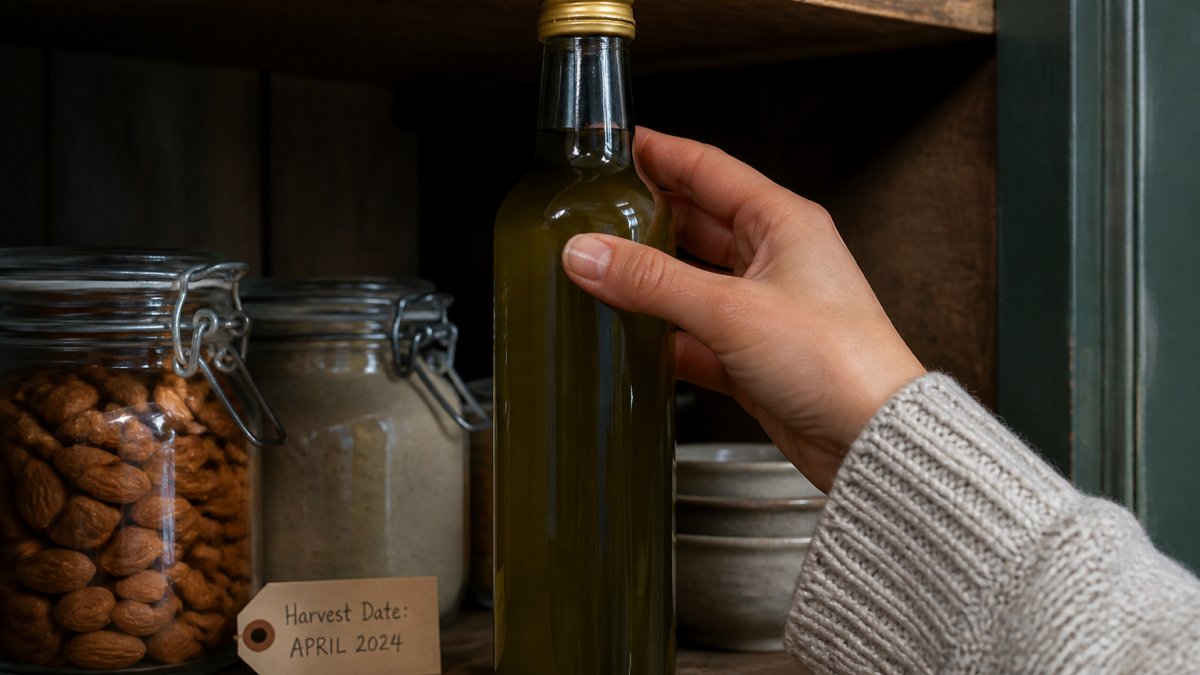
Most guides treat storage as an afterthought. For unfiltered oil it is the main event. The sediment that gives unfiltered oil its polyphenol edge is also what makes it fragile, and the way you store it determines whether you actually capture the benefits you paid for.
Why Unfiltered Oil Has a Shorter Shelf Life
Unfiltered oil carries suspended olive solids and a small amount of residual water. Both accelerate the two chemical processes that ruin oil:
- Hydrolysis, water reacts with triglycerides and releases free fatty acids. Rising free fatty acid levels are a standard marker of degradation.
- Oxidation, oxygen attacks the fatty acids and the polyphenols themselves, producing rancid off-flavours and destroying the antioxidants you wanted.
Filtered oil removes most of that sediment, so it starts with a cleaner slate and ages more slowly. Unfiltered oil starts with more polyphenols but a steeper decline. The practical consequence is a peak drinking window of roughly three to six months from pressing, after which quality drops noticeably even if the oil is still technically edible.
A common pattern among people who buy unfiltered oil for health reasons is to buy a large tin, use it slowly, and end up drinking oxidised oil for the last third of the container. That is worse than buying filtered oil and using it fresh.
The Four Enemies of Unfiltered Oil
- Light, UV and even bright kitchen light break down chlorophyll and polyphenols. Dark glass or an opaque tin is not a stylistic choice; it is functional packaging.
- Heat, every 10°C increase in storage temperature roughly doubles the rate of oxidation. A bottle kept beside the stove ages far faster than one in a pantry.
- Oxygen, the headspace in a half-empty bottle is a reservoir of oxygen. Smaller bottles, or transferring to a smaller container as you use it, reduce the exposure.
- Time, there is no storage trick that beats drinking the oil within its window. Freshness is the primary variable.
Practical Storage Rules
- Keep it in a cool, dark cupboard, tightly sealed, away from the stove, oven, dishwasher and any heat source.
- Store upright, not on its side. Oil contact with the cap and any metal closure accelerates degradation.
- Never decant into a clear decorative bottle on a sunny bench, no matter how good it looks.
- Buy a size you will finish within a few months. A 500ml bottle for a two-person household is often a better buy than a 2 litre tin, even at a higher cost per litre.
- If you buy in bulk, decant a small working bottle and keep the rest sealed in the dark until needed.
- Write the harvest date on the bottle if it is not already printed. It is the only reliable freshness signal you have.
How to Tell If Your Oil Is Still Good
Fresh unfiltered oil should taste grassy, peppery and slightly bitter, with a distinct catch at the back of the throat. As it ages, those notes fade first, then a flat or rancid character takes over.
If you order twice a year, as our members do, that rhythm matches the oil's natural window almost exactly. Our Australian Dietary Guidelines framework is a useful reference point for where olive oil fits in a balanced diet, but storage is where most of the benefit is won or lost.
Cooking with Unfiltered Oil: Smoke Point, Flavour and Everyday Use
Unfiltered extra virgin olive oil has a smoke point high enough for everyday cooking: sautéing, roasting, grilling and finishing. It is not a delicate oil that shatters the moment it meets a pan. What it does not suit is deep-frying at extreme temperatures or repeated reheating.
Flavour is the other half of the story. Unfiltered oil is grassy, vibrant and peppery, with a cloudy appearance and a fuller organoleptic profile than filtered oil. Use it where you will taste it:
- Drizzled over warm bread, soups and pasta
- Finished over grilled vegetables and salads
- Whisked into dressings where the pepperiness carries
- Spooned over burrata, beans or roasted fish
For high-heat searing, a filtered oil is more practical. For everything else, unfiltered is the better eating experience.
Our Northern Hemisphere Harvest Olio Nuovo, pressed in Italy and delivered each December, is bottled straight after processing so it arrives tasting like harvest day. If you want oil from both the Italian and Australian harvests without tracking the calendar, the Olio Nuovo Club delivers twice a year.
Conclusion: Making Unfiltered Olive Oil Work for You
The health benefits of unfiltered olive oil are real, but they are conditional. Polyphenols, oleic acid and antioxidant content only reach your plate if the oil is fresh, stored properly and used within its window.
That is exactly how we build our harvest calendar at Olio Nuovo: pressed within 24 hours of harvest, unfiltered, rich in antioxidants and monounsaturated fats, and delivered twice a year so the bottle in your kitchen is always at its peak.
Frequently Asked Questions
Is raw unfiltered olive oil good for you?
Yes. Unfiltered olive oil retains fine olive particles and sediment that carry additional polyphenols and antioxidants, which are linked to cardiovascular health and reduced oxidative stress. The trade-off is a shorter shelf life of roughly 3 to 6 months for peak quality. For everyday use, drizzle it over warm bread, soups, pasta or salads where the peppery, grassy flavour and its nutritional profile are most apparent.
How long can you keep unfiltered olive oil?
Unfiltered olive oil is best enjoyed within 3 to 6 months of pressing for full flavour and antioxidant content. After that window, the sediment can accelerate oxidation, and the oil may taste flat or slightly rancid. Filtered oil stored in a cool, dark place keeps its quality for up to 2 years. If you buy unfiltered, choose a bottle size you will finish within the season.
Is raw unfiltered olive oil better for you than filtered varieties?
Unfiltered oil generally contains more polyphenols and micronutrients because the sediment holds phenolic compounds that filtration removes. That said, filtered oil lasts longer and holds its quality for up to 2 years, so it suits slower consumption. The better choice depends on how quickly you use it. If you go through a bottle in a few months, unfiltered gives you more of the antioxidant content that supports heart health.
Can unfiltered olive oil be used for high-heat cooking?
Extra virgin olive oil, filtered or unfiltered, has a smoke point around 190 to 210 degrees Celsius, which covers most home cooking including sautéing and roasting. For deep frying at very high temperatures, a filtered oil may hold up slightly better because sediment can burn faster. For everyday pan cooking, drizzling and dressings, unfiltered oil works well and adds a grassy, peppery character.
