

Table of Contents
- Why Premium Olive Oil Is the Foundation of a Mediterranean Diet
- Health Benefits of Extra Virgin Olive Oil: What the Science Shows
- Daily Olive Oil Consumption Guidelines for the Mediterranean Diet
- How to Store Premium Olive Oil for Freshness
- How to Incorporate Premium Olive Oil into Daily Meals
- Choosing High-Quality Gourmet Olive Oil: What to Look For
- Smoke Point Myths: Can You Cook with Premium Olive Oil?
- Flavour Pairing Guide: Matching Olive Oil to Mediterranean Dishes
- Frequently Asked Questions
Last Updated: October 1, 2026
Why Premium Olive Oil Is the Foundation of a Mediterranean Diet
Walk into any kitchen along the Mediterranean coast and you'll find the same thing on the bench: a bottle of fresh, green olive oil within arm's reach. It isn't a garnish there. It's the base note of the entire way of eating.
Health Benefits of Extra Virgin Olive Oil: What the Science Shows
Extra virgin olive oil is the least processed grade, extracted mechanically without heat or chemicals, which is why it retains the compounds that make it worth paying attention to. Two things do the heavy lifting: polyphenols and oleic acid.
Polyphenols and Antioxidants in Fresh Olive Oil
Polyphenols are the natural compounds that give fresh olive oil its peppery kick at the back of the throat. That burn isn't a fault, it's a signal. These antioxidants help the body manage oxidative stress, and their concentration drops as oil ages. This is why harvest date matters more than almost any other label detail: an oil pressed last month will always out-perform one sitting on a shelf for two years.
Oleic Acid and Heart Health
Oleic acid is the monounsaturated fat that makes up the bulk of extra virgin olive oil. It's the reason olive oil has earned its reputation as a heart-healthy fat.
Daily Olive Oil Consumption Guidelines for the Mediterranean Diet
Most traditional Mediterranean eating patterns land somewhere between two and four tablespoons of extra virgin olive oil per day, spread across cooking, dressing, and finishing, a range that comes from how the diet is actually eaten in places like Crete, Puglia, and the Peloponnese, not from a prescription. You don't need to measure it: use it as your default cooking fat, drizzle it over finished dishes, and make sure it shows up at more than one meal.
What Two to Four Tablespoons Actually Looks Like
Here's how the daily range breaks down across a realistic Mediterranean day:
- Breakfast: one tablespoon drizzled over toast with tomato, or stirred through yoghurt with honey and walnuts
- Lunch: one to two tablespoons as the base of a vinaigrette over grains, legumes, or a tomato and cucumber salad
- Dinner: one tablespoon for cooking vegetables or protein, plus a raw finishing drizzle over the plated dish
- Snacks: a small pour for dipping bread, or spooned over labneh, hummus, or roasted capsicum
Morning vs. With Meals: What Works Best
A spoonful before breakfast has become fashionable, but there's no strong reason to prefer it over using olive oil throughout the day. What matters is consistency, not timing. If a morning spoonful feels like medicine, skip it and drizzle generously over lunch instead.
Making Premium Oil Go Further Without Rationing It
The real barrier for most households isn't willingness, it's cost. A genuinely fresh, single-origin extra virgin olive oil costs more per litre than the supermarket blend, and that gap makes people treat the good bottle like perfume. That instinct is backwards.
The workable strategy is a two-bottle kitchen:
- Everyday bottle: a solid, mid-range extra virgin olive oil for roasting, sautéing, and high-heat work where the oil's finer aromatics will be muted anyway
- Finishing bottle: the premium, freshly pressed oil for raw applications, dressings, dips, a drizzle over soup, a pour over warm bread, where you actually taste the harvest
A Note on Consistency Over Perfection
The Mediterranean diet isn't a 30-day challenge. It's a pattern that works because it's sustainable. If you hit two tablespoons on a busy Tuesday and four on a slow Sunday, you're doing it right. The people who grew up eating this way don't count tablespoons. They cook with oil, dress with oil, and dip bread in oil, and the numbers take care of themselves.
How to Store Premium Olive Oil for Freshness
Heat, light, and air are the three things that ruin good olive oil. Control those and you'll protect both flavour and nutritional value.
How to Incorporate Premium Olive Oil into Daily Meals
The fastest way to make premium olive oil part of your routine is to stop saving it for special occasions and start using it for the meals you already cook.
Northern Hemisphere Harvest Olio Nuovo →
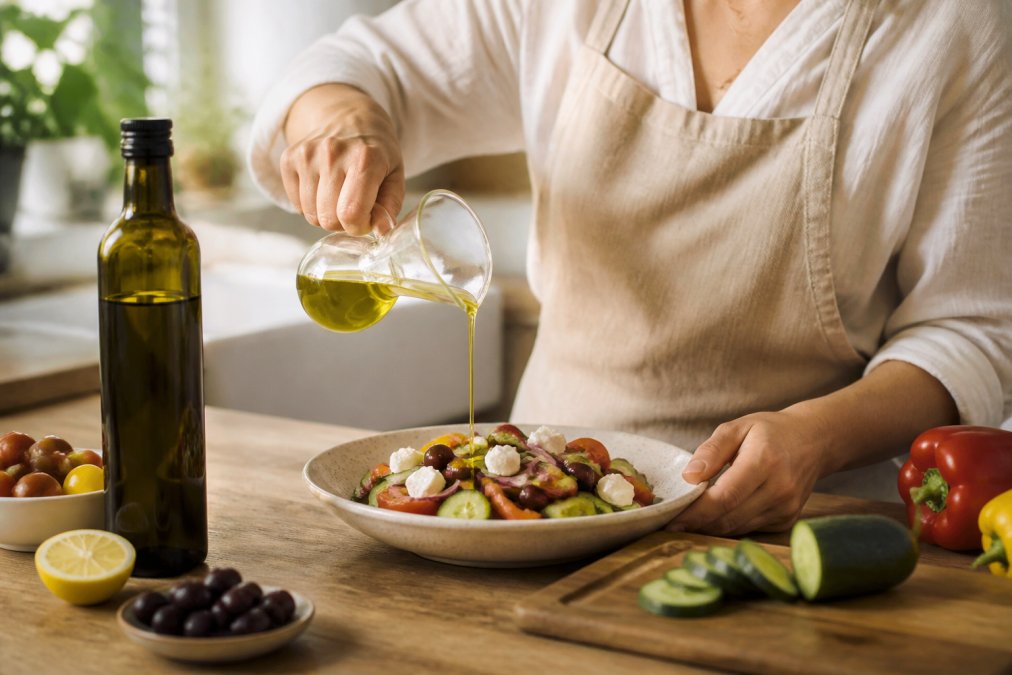
- Breakfast: drizzle over toast, eggs, or tomato with a pinch of salt
- Lunch: use as the base of a vinaigrette for grains, legumes, or greens
- Dinner: cook your vegetables and proteins in it, then finish the plate with a raw drizzle
- Snacks: dip good bread, or spoon it over labneh or hummus
Drizzling, Sautéing, and Emulsification: Practical Uses
Drizzling is where fresh oil shines. Heat mutes delicate, grassy notes, so the finishing pour is where you taste the harvest.
Choosing High-Quality Gourmet Olive Oil: What to Look For
Gourmet quality comes down to four things you can check on the label: harvest date, origin, extraction method, and whether it's filtered or unfiltered.
| What to Check | Why It Matters | What Good Looks Like |
|---|---|---|
| Harvest date | Freshness drives flavour and antioxidants | A specific month and year, not just "best before" |
| Origin | Traceability supports authenticity | Named grove, region, or producer |
| Extraction | Cold-pressed retains more polyphenols | Mechanically extracted, no heat or chemicals |
| Filtration | Affects shelf life and character | Unfiltered for seasonal drinking, filtered for keeping |
Smoke Point Myths: Can You Cook with Premium Olive Oil?
Yes, you can cook with premium extra virgin olive oil. The idea that it's too delicate for heat is one of the most persistent myths in home cooking.
Flavour Pairing Guide: Matching Olive Oil to Mediterranean Dishes
Fresh, peppery oil and mellow, buttery oil belong on different plates, matching them properly is the difference between a good dish and a memorable one. Olive oil flavour sits on three axes: fruitiness (green and grassy through to ripe and rounded), bitterness (the pleasant, tonic edge on the sides of your tongue), and pungency (the peppery catch at the back of your throat).
Matching Oil Profile to Dish
- Grassy and peppery: bitter greens such as chicory and radicchio, grilled vegetables, braised legumes, tomato-based pasta sauces, and ribollita. The oil's bitterness mirrors the food's.
- Mild and buttery: grilled fish, soft cheeses like feta and ricotta, scrambled eggs, and delicate grains such as couscous and bulgur. A punchy oil would flatten these.
- Intensely green and pungent: warm bread, bruschetta, raw tomato salads, and simple soups where the oil is the only fat and has nowhere to hide.
- Fruity and rounded: roasted root vegetables, pasta with olive oil and garlic, baked fish, and even olive oil cakes and biscotti where a softer oil carries sweetness.
A practical rule: the bolder the food, the bolder the oil it can carry. Delicate dishes get overwhelmed by a punchy oil, and mild oils disappear entirely against strong flavours.
Regional Anchors Worth Knowing
Traditional pairings aren't arbitrary, they grew up alongside the oils and dishes in the same place.
- Tuscan-style oils (typically greener, more bitter and peppery) sit naturally with white beans, ribollita, and grilled bread
- Puglian and Sicilian oils (often riper and rounder) suit roasted vegetables, pasta, and seafood
- Greek oils (frequently pungent and herbaceous) match horiatiki salad, grilled octopus, and horta
- Spanish oils (ranging from fruity to peppery depending on region) work across tapas, pan con tomate, and grilled peppers
A Two-Minute Tasting Method
Before you pair anything, taste the oil on its own: pour a small amount into a glass, warm it in your hands, and sip it neat, noting where the bitterness and pepper hit. Then taste it again over plain bread, that's closer to how it will behave on a plate. If the oil tastes flat, waxy, or faintly like crayons, no pairing will save it.
Storage: Protecting the Pairing You Paid For
A perfect pairing is wasted on an oxidised oil. Keep the bottle in a cool, dark cupboard, decant only what you'll use in a week or two into a smaller bottle, and keep the main supply sealed. Unfiltered oil is a seasonal pleasure, best enjoyed within three to six months; filtered oil, stored properly, holds its quality for up to two years.
Frequently Asked Questions
How much olive oil should you have per day on the Mediterranean diet?
Most research suggests 2 to 4 tablespoons (about 30 to 60ml) daily for adults following a Mediterranean diet. This amount provides meaningful monounsaturated fats and polyphenols without excessive calories. Start with 1 to 2 tablespoons if you are new to olive oil, then increase gradually. Use it for cooking, drizzling over vegetables, and dressing salads. The key is consistency. Premium extra virgin olive oil is best enjoyed raw or lightly cooked to preserve its polyphenol content.
What makes premium extra virgin olive oil different from standard supermarket oils?
Premium extra virgin olive oil is typically cold-pressed within 24 hours of harvest, preserving higher levels of polyphenols and antioxidants. Supermarket oils may be blended from multiple harvests and countries, often months or years old. Fresh premium oil has a grassy, peppery taste and a distinct green colour. You can verify quality through harvest dates and award certifications. Look for oil pressed within 24 hours of harvest for the most vibrant flavour and nutritional profile.
How do polyphenols in fresh olive oil contribute to heart health?
Polyphenols are natural antioxidants found in extra virgin olive oil. They help reduce oxidative stress and inflammation, both linked to cardiovascular disease. Research shows polyphenols can support healthy cholesterol management and improve blood vessel function. Fresh, unfiltered olive oil contains higher polyphenol levels than older or heavily processed oils. The peppery kick at the back of your throat is a sign of these compounds. For maximum benefit, use premium extra virgin olive oil raw or lightly cooked.
Can you cook with premium olive oil or should it only be used raw?
You can cook with premium olive oil, but its delicate polyphenols and flavour degrade with high heat. For sautéing at medium temperatures, it works well. For deep frying, the smoke point myths are largely overstated; extra virgin olive oil has a smoke point around 190 to 210 degrees Celsius, suitable for most home cooking. However, to fully appreciate the flavour and health benefits, reserve your best premium oil for drizzling, dressings, and finishing dishes.
