

Table of Contents
- Why Freshness Matters in Extra Virgin Olive Oil
- Reading the Extra Virgin Olive Oil Harvest Date
- Visual Indicators: Colour and Clarity
- Assessing Aroma Profile and Smell
- Taste Characteristics: Bitterness, Peppery Finish, and Freshness
- Recognising Signs of Rancid Olive Oil
- How to Store Olive Oil for Maximum Freshness
- Frequently Asked Questions
Last Updated: September 23, 2026
Why Freshness Matters in Extra Virgin Olive Oil
To identify fresh olive oil, you need to understand how fundamentally different it is from the oil sitting on supermarket shelves for months. The difference isn't subtle, it's the gap between vibrant, alive oil and something that's slowly fading.
When olive oil is pressed within hours of harvest, it captures volatile compounds that give it character. These compounds break down over time. Heat, light, and oxygen all accelerate the process. By the time mass-produced oil reaches your kitchen, much of what made it special has already vanished.
This matters because freshness directly affects flavour, aroma, and nutritional value. Fresh oil tastes peppery and grassy. It has a vivid green colour. It contains higher levels of polyphenols, the antioxidants that make olive oil genuinely good for you. Older oil tastes flat. It looks dull. The polyphenols have oxidised away.
At Olio Nuovo, we press our oil within 24 hours of harvest and bottle it immediately. That's the only way to preserve what makes olive oil worth buying in the first place. Most producers can't do this. They harvest, transport, store, process, and distribute, a chain that takes weeks or months. By then, freshness is already compromised.

The real question isn't whether freshness matters. It's how to tell if the oil you're holding is actually fresh.
Reading the Extra Virgin Olive Oil Harvest Date
The harvest date is your most reliable guide to freshness. Not the "best by" date, the actual harvest date.
Many oils carry only a "best by" or "use by" date. That tells you when the producer thinks the oil will start declining. It doesn't tell you when it was made. A bottle with a "best by" date two years away might have been harvested 18 months ago. You're buying old oil with a long shelf life ahead of it.
The harvest date is different. It tells you exactly when the olives were picked and pressed. A harvest date from the current season means the oil is genuinely fresh. A harvest date from last year means it's already aging.
Look for bottles that clearly state "Harvest Date" or "Pressed Date" rather than just expiry information. The best producers print this prominently because they're proud of how recently their oil was made.
For unfiltered olive oil, freshness is even more critical. Unfiltered oil contains sediment and suspended solids that can continue to break down over time. This changes the flavour profile. Fresh unfiltered oil tastes vibrant and complex. Older unfiltered oil can develop musty or fusty notes, off-flavours that signal the oil is past its peak.
When you see a harvest date, calculate how old the oil actually is. Oil from the current harvest season is ideal. Oil from the previous season is acceptable if stored properly. Oil older than that is no longer fresh, regardless of what the label says.
Visual Indicators: Colour and Clarity
What you see in the bottle tells you a lot about freshness and quality.
Fresh, early-harvest extra virgin olive oil is typically green or golden-green. This colour comes from chlorophyll and other pigments in the olives. As oil ages, chlorophyll breaks down. The green fades to yellow, then to pale gold. Colour alone doesn't guarantee freshness, some varieties are naturally lighter, but a vivid green is a strong signal of recent harvest.
Unfiltered oil is cloudy. This cloudiness is sediment: tiny particles of olive flesh and skin that remain in the oil. Cloudiness is not a defect. It's a sign the oil hasn't been heavily processed. Fresh unfiltered oil looks thick and opaque. As it ages, some of that sediment settles to the bottom, and the oil may clear slightly. Extreme clarity in an "unfiltered" oil is a red flag, it suggests either heavy filtration or age.
Filtered oil is clear. If you buy filtered extra virgin olive oil, expect transparency. Cloudiness in filtered oil suggests poor storage or contamination.
Look for oil in dark glass bottles. Clear or light glass lets light through, which accelerates oxidation. Dark bottles protect the oil from light damage. If you see premium olive oil in a clear bottle, that's a warning sign. The producer either doesn't understand storage or doesn't care about quality.
Any visible sediment at the bottom of an unfiltered bottle is normal. Shake gently before use. If the oil looks separated or has visible separation that doesn't mix, that suggests temperature fluctuation or age-related breakdown.
Assessing Aroma Profile and Smell
Aroma is one of the most reliable sensory tests for freshness. Your nose detects volatile compounds, the chemicals that give oil its character. Fresh oil has a strong, complex aroma. Old oil smells flat or muted.
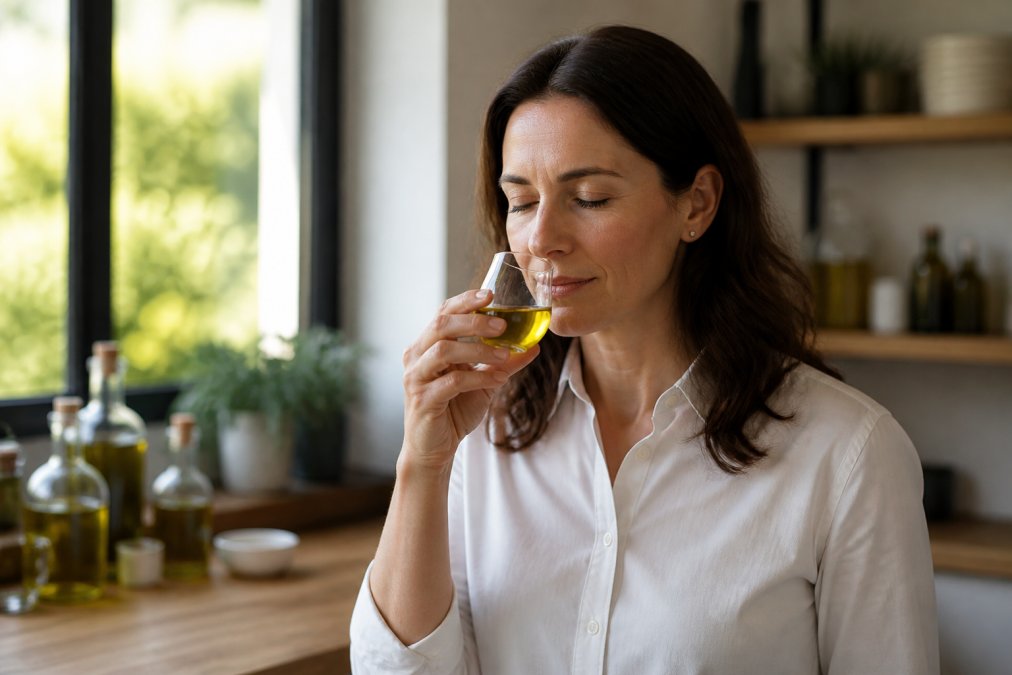
Open a bottle and smell immediately. Fresh oil should have a distinctive aroma. Early-harvest oils often smell grassy, herbaceous, or like fresh-cut grass. Some smell like green apple or artichoke. Others have notes of almond or hazelnut. The specific aroma depends on the olive variety and harvest time, but the key is that it's vivid and immediate.
Northern Hemisphere Harvest Olio Nuovo →
If you smell nothing, or only a faint, generic smell, the oil has lost its volatile compounds. It's old.
Watch for off-aromas. A musty or fusty smell means the olives were stored too long before pressing or the oil has oxidised. A crayon-like smell suggests defects in the olives or processing. Vinegary or sour aromas mean the oil has fermented or been contaminated.
Train your nose by comparing oils side by side. Smell a fresh oil first, then an older one. The difference becomes obvious. Fresh oil has presence. Old oil fades into the background.
Aroma also tells you about storage conditions. If an oil smells stale or flat despite a recent harvest date, it was probably stored in heat or light. Good aroma + recent harvest date = good storage. Weak aroma + recent harvest date = poor storage.
Taste Characteristics: Bitterness, Peppery Finish, and Freshness
Taste is the final verification. Fresh extra virgin olive oil should taste complex and assertive. It should not taste neutral or bland.
The peppery finish is a signature of fresh oil. This peppery sensation, sometimes described as a slight scratch in the throat, comes from polyphenols. It's not a defect. It's proof the oil is young and full of antioxidants. As oil ages, this peppery character fades. Very old oil tastes smooth and mild, which sounds pleasant but actually means the beneficial compounds have degraded.
Bitterness is also a sign of freshness. Early-harvest oils, made from green olives, tend to be more bitter than late-harvest oils made from riper fruit. This bitterness is not unpleasant, it's part of the complexity. If you taste bitterness, you're tasting polyphenols. If the oil tastes sweet or buttery with no bitterness, it's either a very late harvest or it's old.
Fresh oil tastes vibrant. You notice it immediately. The flavour is strong enough that you couldn't ignore it if you tried. Older oil tastes muted. It blends into the background. On a salad, fresh oil stands out. Old oil disappears.
Look for tasting notes that suggest freshness: grassy, herbaceous, peppery, slightly bitter, complex. Avoid oils described only as "smooth," "buttery," or "mild", these are often euphemisms for old or low-quality oil.
When you taste, hold the oil in your mouth for a few seconds before swallowing. This lets the flavour compounds reach all your taste receptors. Pay attention to the finish, does the peppery sensation linger, or does it fade immediately? Lingering peppery notes mean fresh oil with active polyphenols.
Recognising Signs of Rancid Olive Oil
Rancid oil is oxidised oil. The fats have broken down through exposure to heat, light, or oxygen. Rancid oil tastes unpleasant and has lost most of its nutritional value.
Learn to spot these warning signs:
Smell: Rancid oil smells like old nuts, cardboard, or stale fat. It's an unmistakable off-odour. Trust your nose, if something smells wrong, don't use it.
Taste: Rancid oil tastes bitter in an unpleasant way (different from the good bitterness of fresh polyphenols), soapy, or metallic. It may taste like it's coating your mouth with old grease.
Appearance: Rancid oil may look darker than expected or have a murky appearance.
How to Store Olive Oil for Maximum Freshness
Storage is where most home cooks lose the battle. They buy good oil and then ruin it through careless storage.
Frequently Asked Questions
How can you tell if olive oil has gone rancid?
Rancid olive oil develops a musty, stale, or crayon-like smell, quite distinct from fresh oil's grassy or peppery aroma. The taste becomes flat and unpleasant, sometimes bitter or soapy. Rancidity occurs when polyphenols and volatile compounds break down due to heat, light, or age. If your oil smells off or tastes unpleasant, it has oxidised and should not be used. Fresh oil like Olio Nuovo, pressed within 24 hours of harvest, retains its vibrant character and avoids rancidity through proper storage and timely consumption.
Does the harvest date matter when buying olive oil?
Yes, harvest date is critical. Olive oil is fresher and more nutritious closer to its harvest. Early-harvest oils contain higher polyphenol levels and more volatile compounds that create peppery, grassy notes. Oil stored for months loses these compounds and sensory markers of quality. When you see a harvest date on the label, you know exactly how old the oil is. Olio Nuovo's twice-yearly delivery ensures you receive oil at peak freshness, pressed within 24 hours of picking.
What are the key indicators of high-quality extra virgin olive oil?
Look for: a green or golden colour (not clear), a strong aroma with notes of cut grass or green apple, a peppery finish that catches in your throat, and bitterness in the aftertaste. These sensory markers indicate high polyphenol content and recent harvest. Check the label for harvest date (not just 'best by'), cold-pressed certification, and producer transparency. Unfiltered oil may show sediment, a sign of minimal processing. Award-winning oils like Olio Nuovo combine all these traits: vibrant colour, distinctive aroma, and that signature peppery bite.
Can you tell if olive oil is fresh just by looking at it?
Colour alone is not reliable, but cloudiness and sediment are good signs. Fresh, unfiltered extra virgin olive oil appears cloudy or hazy because it contains suspended particles and vegetable water, markers of minimal processing. Clear oil has often been filtered or stored for months. Green or golden hues suggest early harvest and higher polyphenol content. However, colour varies by olive variety and region. To truly assess freshness, combine visual inspection with smell and taste. A fresh oil will have a vibrant, grassy aroma and a peppery, slightly bitter taste.
