
Last Updated: November 1, 2026
Quick Summary
Robust olive oil is the right partner for grilled vegetables because its bitter, peppery character stands up to char, smoke and caramelised sweetness instead of disappearing behind them. Choose a fresh, early-harvest extra virgin oil with noticeable bitterness and a peppery finish, then coat the vegetables before grilling and drizzle more after.
- Olio Nuovo is pressed within 24 hours of harvest for freshness.
- Look for a harvest date on the label, not just a best-before date.
- Pat vegetables dry so they char instead of steaming.
- Coat the food with oil, not the grill grates.
- Drizzle fresh oil over the vegetables while they are still warm.
Table of Contents
- Why Strong Olive Oil Belongs With Grilled Vegetables
- The Best Olive Oil for Grilled Vegetables: What to Look For
- Olive Oil and Vegetable Flavour Pairings That Work
- How to Season Grilled Vegetables Before and After Cooking
- Finishing Olive Oil for Vegetables: The Final Drizzle
- Common Mistakes When Pairing Strong Olive Oil with Grilled Vegetables
- Choosing Your Bottle of Olio Nuovo for the Grill
- Frequently Asked Questions
Why Strong Olive Oil Belongs With Grilled Vegetables
Robust olive oil is the right partner for grilled vegetables because its bitter, peppery character stands up to char, smoke and caramelised sweetness instead of disappearing behind them. Olio Nuovo is pressed within 24 hours of harvest, and that freshness is exactly what you want when a dish is built on high heat.
Grilling concentrates flavour. It drives off water, browns the natural sugars and adds a smoky edge. A delicate, mild oil gets lost in that. A strong oil cuts through.
It is a seasoning, and it should be chosen like one.
- Bitterness balances sweetness from caramelised vegetables
- Pepperiness lifts smoky, charred notes
- Grassy freshness adds a green counterpoint to sweet capsicum and pumpkin
- Body carries flavour into the vegetable rather than sitting on top
Get the oil right and you need less salt, less acid and less fuss. Get it wrong and you end up adding things to fix a dish that was never seasoned properly in the first place.
The Best Olive Oil for Grilled Vegetables: What to Look For
The best olive oil for grilled vegetables is a fresh, early-harvest extra virgin oil with noticeable bitterness and a peppery finish. Look for a harvest date on the label, a dark bottle, and descriptors like grassy, herbaceous or artichoke.
Here is what actually matters when you are standing in a shop or scrolling a product page:
- Harvest date, not just best-before. Olive oil is a fresh product. A best-before date tells you almost nothing.
- Extra virgin, always. Grilling is high heat. You want an oil that has not been refined.
- Dark glass or a tin. Light degrades oil. Clear bottles look lovely and age badly.
- Bitter and peppery descriptors. These signal the strong style you are after.
- A named origin and producer. Vague labels can make freshness hard to judge.
Polyphenols are the compounds behind that bitterness and pepper, and they are part of why fresh oil tastes alive. We only describe polyphenol levels where a product's own information verifies them, which is the honest way to do it.
If you want to sharpen your palate before you buy, our guide on how to taste Olio Nuovo properly walks through the slurp, the swallow and the pepper catch at the back of the throat.
Olive Oil and Vegetable Flavour Pairings That Work
Pairing comes down to matching intensity. Strong, bitter greens and charred, sweet vegetables want a strong oil. Soft, buttery vegetables want something gentler or a lighter hand.
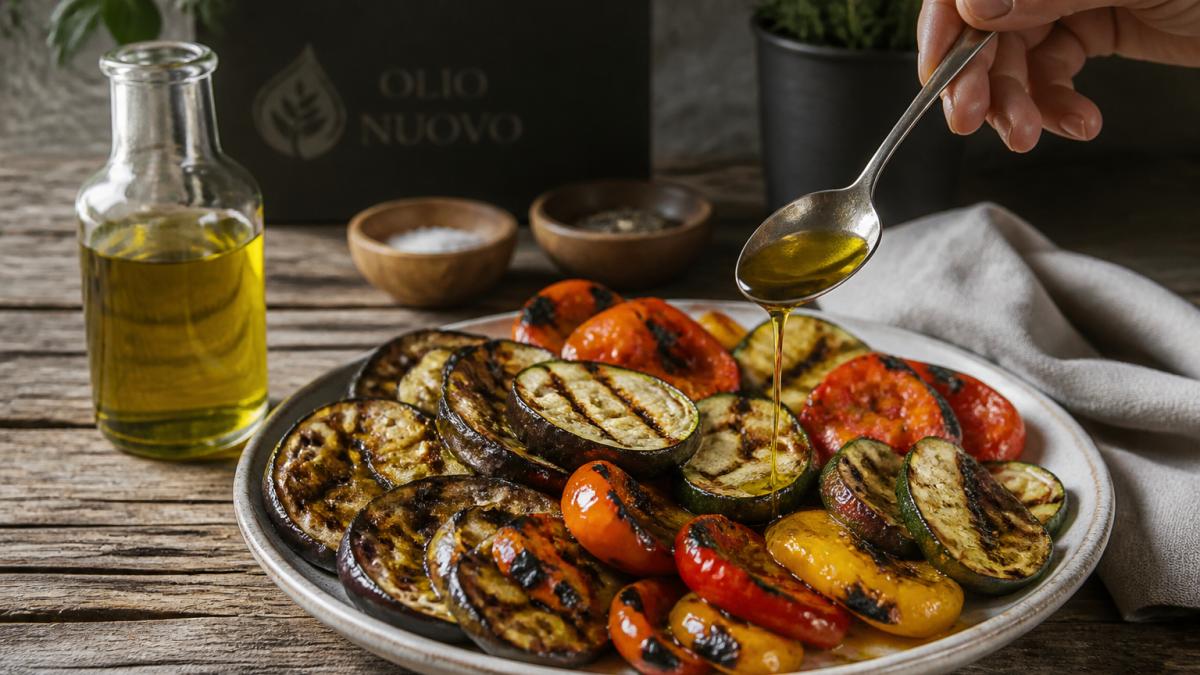
Here are pairings that hold up in practice:
| Vegetable | Natural Character | Oil Style | Why It Works |
|---|---|---|---|
| Zucchini | Mild, watery, sweetens fast | Strong | Bitterness stops it tasting flat |
| Eggplant | Spongy, smoky, meaty | Strong | Body matches the flesh |
| Capsicum | Sweet, blistered, smoky | Strong | Pepper cuts the sugar |
| Asparagus | Grassy, green, slightly bitter | Strong | Echoes the green notes |
| Pumpkin | Sweet, dense, caramelised | Medium-strong | Bitter edge balances sweetness |
| Mushrooms | Earthy, savoury, absorbent | Strong | Soaks up flavour fast |
The pattern is simple. The sweeter or smokier the vegetable, the more bitterness you can carry.
For more ways to put these combinations to work, browse our recipes collection.
How to Season Grilled Vegetables Before and After Cooking
Season grilled vegetables in two stages: oil and salt before they hit the grill, then a fresh drizzle of oil and a little acid after they come off. This two-stage approach is the single biggest improvement most home cooks can make.
Before grilling:
- Cut vegetables into even pieces so they cook at the same rate.
- Pat them dry. Wet vegetables steam instead of charring.
- Toss with a generous amount of strong oil until every piece is coated.
- Season with salt now, not later. Salt draws out moisture and seasons from within.
- Let them sit for ten minutes before they hit the heat.
After grilling:
- Move the vegetables to a platter and let them rest for two minutes.
- Drizzle with fresh oil. The heat lifts the aroma.
- Add a squeeze of lemon or a splash of vinegar.
- Finish with flaky salt and, if you like, herbs.
Watch out: oiling the grill grates instead of the vegetables is a common shortcut that gives you uneven char and flare-ups. Coat the food.
Northern Hemisphere Harvest Olio Nuovo (December Delivery) →
Finishing Olive Oil for Vegetables: The Final Drizzle
Finishing olive oil for vegetables is the oil you add off the heat, and it should be the best oil in your kitchen. Heat flattens aroma. A raw drizzle at the end puts it back.
This is where a fresh, robust olive oil earns its place. Our Northern Hemisphere Harvest Olio Nuovo is pressed within 24 hours of harvest and has a grassy aroma and lively peppery finish that suit this job.
A few practical notes on finishing:
- Drizzle while the vegetables are still warm. Warm food absorbs and releases aroma better.
- Use more than feels sensible. A proper finishing pour is generous, not a token thread.
- Add it at the table if you can. The aroma hits the room, not the range hood.
- Keep a separate bottle for finishing. It stops you burning through your best oil on roasting trays.
If you want to understand why a fresh, premium oil behaves so differently from a supermarket bottle, our piece on why premium olive oil is better for cooking explains the difference in plain terms.
Common Mistakes When Pairing Strong Olive Oil with Grilled Vegetables
Most pairing problems come down to a handful of avoidable errors. Fix these and the rest takes care of itself.
- Using a mild oil on charred vegetables. The flavour vanishes. You end up over-salting to compensate.
- Over-oiling before grilling. Too much oil causes flare-ups and greasy results. Coat, do not soak.
- Skipping the finishing drizzle. Cooking oil and finishing oil do different jobs.
- Storing oil near the stove. Heat and light speed up staleness. Keep it in a cool, dark cupboard.
- Judging oil by colour. Greener is not automatically better or fresher.
- Using the same strong oil for everything. It is superb on grilled vegetables and can overwhelm delicate dishes.
Bitterness is a feature of a strong oil, not a flaw, and it is the quality that suits grilled food.
For quick answers on storage, shelf life and how to use your oil correctly, our FAQs page covers the details.
Choosing Your Bottle of Olio Nuovo for the Grill
Choosing the right bottle comes down to how you cook and how fast you use oil. A strong, fresh extra virgin oil is the workhorse for grilling season.
Our fresh harvest extra virgin olive oil is available filtered or unfiltered, in 500ml and 2 litre tins. Unfiltered has a cloudy appearance and a bold, vibrant flavour. Filtered is clearer and more balanced, which suits anyone who prefers a tidier pour.
Both are pressed within 24 hours of harvest and delivered twice a year, so the oil you are cooking with is fresh rather than long stored.
Best for: home cooks who grill vegetables often and want one confident, strong oil for coating, roasting and finishing. Skip if: you only ever dress delicate salads, where a gentler oil may suit you better.
To browse the current range and seasonal releases, shop Olio Nuovo fresh harvest extra virgin olive oil in Australia.
The real test is not whether the oil is expensive. It is whether it makes a simple plate of charred zucchini taste like something you would order. Fresh, strong oil does that with nothing more than salt and heat.
Olio Nuovo presses within 24 hours of harvest, offers filtered and unfiltered options, and delivers twice-yearly. Explore the range and see what a genuinely fresh oil does for your grill. Get started with Olio Nuovo and taste the difference freshness makes at https://olionuovo.com.au.

Frequently Asked Questions
What vegetables pair best with robust olive oil?
Robust olive oil works best with vegetables that can handle a strong, peppery flavour. Charred capsicum, eggplant, zucchini, and bitter greens like radicchio are excellent matches. These vegetables develop deep, smoky notes on the grill that stand up to the oil's intensity rather than being overwhelmed by it. Delicate vegetables like asparagus or snow peas are better suited to a milder, more buttery olive oil so their natural flavour stays front and centre.
Should you put olive oil on vegetables before or after grilling?
Do both, but for different reasons. Brush vegetables lightly with robust olive oil before grilling to stop them sticking and help them char evenly. Then drizzle more oil after cooking, once the vegetables come off the heat. This finishing drizzle preserves the oil's fresh, peppery character, which fades when exposed to high heat. Using the oil twice gives you better cooking results and more flavour.
Can you use extra virgin olive oil for grilling vegetables?
Yes. Extra virgin olive oil is suitable for grilling vegetables, which cook quickly over direct heat rather than sitting in a hot pan for a long time. Its smoke point is high enough for typical grilling temperatures. The key is not to overheat it or let it burn. Brush it on lightly, grill over medium-high heat, and add a fresh drizzle of finishing oil after cooking for the best flavour.
How much olive oil should you use on grilled vegetables?
A light brush before grilling is enough to coat the surface and prevent sticking, roughly one to two teaspoons per cup of chopped vegetables. After grilling, drizzle about one tablespoon of finishing olive oil over a whole platter and toss gently. Start with less than you think you need, taste, and add more. Robust olive oil is potent, so a little goes a long way and over-oiling can make vegetables greasy.

