

Table of Contents
- What Early Harvest Olive Oil Actually Is (And What It Isn't)
- Why Olives Picked Early Taste Different: Bitterness, Pungency and the Peppery Finish
- The Health Benefits of High Polyphenol Olive Oil
- Is Fresh Pressed Olive Oil Better for Skin?
- Culinary Uses for Early Harvest Olive Oil
- How to Store Early Harvest Olive Oil So It Stays Fresh
- How to Tell Real Early Harvest Oil from Marketing Claims
- Frequently Asked Questions
Last Updated: September 20, 2026
What Early Harvest Olive Oil Actually Is (And What It Isn't)
Early harvest olive oil is extra virgin olive oil pressed from olives picked at the very start of the season, while the fruit is still green and unripe. At Olio Nuovo, our oil is pressed within 24 hours of harvest to capture that vivid, cloudy character before it fades. The result is a lower yield per tree but a far more intense oil: greener in colour and higher in the polyphenols that drive both flavour and shelf behaviour.

Here's what it isn't. It isn't simply "fresh" oil, and it isn't the same as any bottle labelled extra virgin. Supermarket oil can legally carry that label while sitting in a warehouse for months. Early harvest oil is defined by when the olives were picked, not by the marketing term on the front of the bottle.
The trade-off is real: growers get less oil from each tree, which is why early harvest costs more to produce.
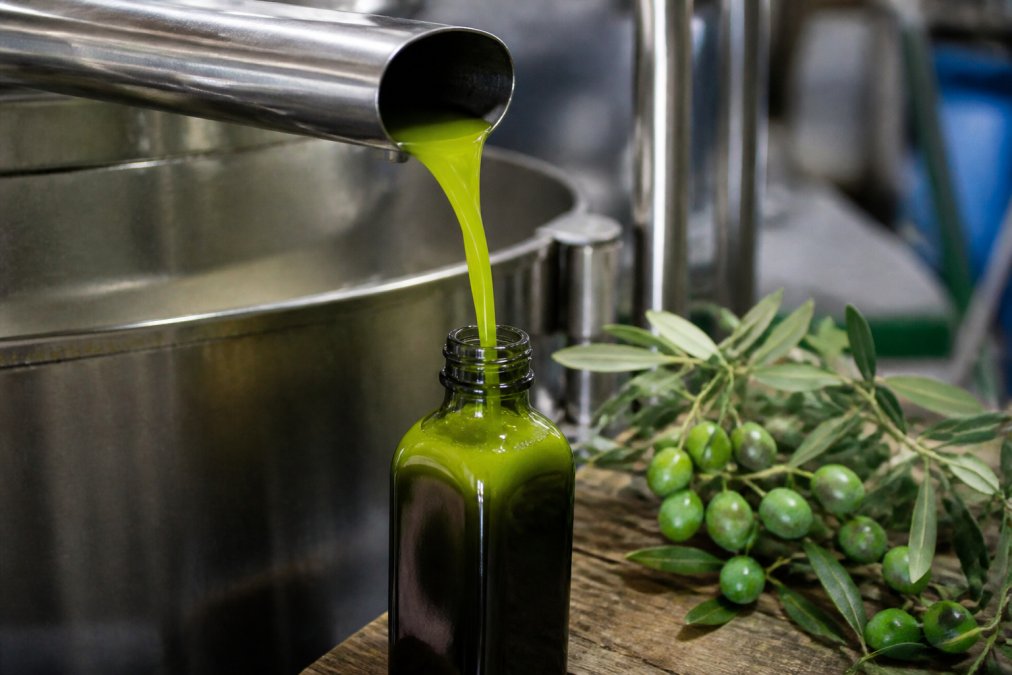
Why Olives Picked Early Taste Different: Bitterness, Pungency and the Peppery Finish
The flavour difference comes down to fruit maturity. Olives picked early carry more polyphenols and less oil, and those compounds create the bitterness and pungency that define the style. That peppery finish, the one that catches the back of your throat, is a signature of early harvest rather than a fault.
A common mistake is treating bitterness as a defect. In practice, it's a marker of freshness. The sensory profile shifts as the season progresses: late-harvest oil tastes rounder and milder, but it loses the intensity that makes early harvest worth seeking out.
The International Olive Council's sensory analysis standards explain how trained panels score fruitiness, bitterness and pungency. If you want a benchmark for what a genuine early harvest sensory profile looks like, that's where to start.
The Health Benefits of High Polyphenol Olive Oil
High polyphenol olive oil delivers more of the antioxidants and monounsaturated fats associated with extra virgin olive oil. Polyphenols, including oleocanthal and hydroxytyrosol, are the compounds behind both the peppery kick and much of the nutritional interest. Because early harvest fruit is less ripe, the oil retains more of them.
Many health-conscious buyers find this is the real reason to pay more. The nutritional integrity of the oil depends heavily on how it was made and how fresh it is, not just the label.
What the Polyphenol Number Tells You
A polyphenol figure tells you how much of these antioxidant compounds the oil contains, usually measured in milligrams per kilogram (mg/kg). Higher numbers generally mean a more robust, longer-lasting oil with stronger bitterness and pungency.
A common pattern is for early harvest oils to land somewhere between 250 and 500 mg/kg, while late harvest oils often fall below 150 mg/kg. These are indicative ranges, not guarantees, because variety, grove conditions and extraction method all shift the result.
Be sceptical here. Not every producer publishes a number, and the ones who do should be able to show you how it was tested. If a bottle claims "high polyphenol" with nothing to back it up, treat that as decoration.
How to Verify a Polyphenol Claim
Ask for the chemical analysis, not just the marketing copy. A credible report will show:
- Free acidity, expressed as a percentage of oleic acid. Extra virgin olive oil must sit at or below 0.8%, and early harvest oils often come in well under that.
- Peroxide value, measured in milliequivalents of active oxygen per kilogram (meq O2/kg). The extra virgin limit is 20, but fresh, well-made oil typically reads in single digits.
- Total polyphenols, in mg/kg, with the test method named.
These three figures together tell you more about freshness and quality than any front-of-bottle claim. If a producer can't or won't share them, that silence is itself information.
What Polyphenols Do Not Do
Polyphenols are not a medicine, and no olive oil is a treatment for any condition. The interest is in their role as part of a normal diet, not as a therapeutic dose. Treat dramatic health promises on a label the same way you'd treat any other unregulated claim.
Is Fresh Pressed Olive Oil Better for Skin?
Fresh pressed olive oil can be used on skin, and many people find it soothing, but "better" depends on what you're comparing it to. Extra virgin olive oil contains vitamin E and monounsaturated fats that make it a popular carrier oil and cleanser base.
Northern Hemisphere Harvest Olio Nuovo →
The catch is freshness. Oil that has oxidised loses the qualities that make it pleasant on skin, and rancid oil helps nobody. If you're using it topically, use the same fresh, well-stored oil you'd cook with, not a bottle that's been open on a sunny shelf for a year.
skincare isn't a regulated claim for olive oil, so treat any dramatic promises with caution.
Culinary Uses for Early Harvest Olive Oil
Early harvest olive oil is best used where its flavour can be tasted, not buried under heat. Its bitterness and pungency are the point, so treat it as a finishing oil first and a cooking oil second.
Where It Belongs and Where It Doesn't
- Belongs: drizzled over salad, bread, grilled vegetables, soup, pasta, or a plate of tomatoes
- Belongs: whisked into a dressing or used as a dip
- Doesn't: deep-frying, where the flavour is wasted and the oil degrades
- Doesn't: heavy sauces that will drown out the peppery edge
| Use | Best Choice | Why |
|---|---|---|
| Finishing salads and bread | Early harvest | Flavour is the whole point |
| Everyday cooking | Standard extra virgin | Cheaper, flavour matters less |
| Deep-frying | Neutral oil | Heat destroys delicate flavour |
| Gifting | Early harvest | Distinctive and seasonal |
How to Store Early Harvest Olive Oil So It Stays Fresh
Store early harvest olive oil in a cool, dark place, in a dark-coloured bottle, with the cap tight. Heat and light are the two things that speed up oxidation, and oxidation is what turns a vibrant oil flat.
Unfiltered oil has a shorter shelf life than filtered oil. Our unfiltered Olio Nuovo is best enjoyed within 3 to 6 months, while filtered oil stored properly can hold its brilliance for up to 2 years.
How to Tell Real Early Harvest Oil from Marketing Claims
The honest answer is that "early harvest" is not a legally protected term, so any producer can print it. What separates a real early harvest oil from a marketing claim is evidence you can check.
The Paper Trail
Look for a harvest date rather than just a best-before date. Look for a specific estate or grove, a named producer, and award results you can verify independently. Ask whether the oil is unfiltered, since that changes both flavour and shelf life.
The Chemical Evidence
Most guides stop at the label. The stronger test is the analysis behind it. Extra virgin olive oil must meet defined compositional criteria, and a producer selling into the Australian market should be able to point to a current certificate of analysis.
Ask for these figures:
- Free acidity at or below 0.8% for extra virgin, with early harvest oils often far lower.
- Peroxide value below 20 meq O2/kg, and ideally in single digits for fresh oil.
- Total polyphenols in mg/kg, with the test method named.
- Harvest date and pressing date, so you can judge how much of that freshness has already been spent.
What Certification Does and Does Not Prove
You can order Olio Nuovo online, and each bottle carries the harvest details that back up the claim.
Frequently Asked Questions
Is early harvest olive oil better than standard extra virgin olive oil?
It depends what you want from the bottle. Oil pressed from unripe olives usually carries more polyphenols, a stronger peppery finish and a shorter shelf life, while standard extra virgin olive oil is milder and keeps longer. Early harvest oil is best treated as a seasonal product: enjoy it fresh, drizzle it raw, and don't expect it to sit in the cupboard for two years. If you want a daily all-purpose oil plus something special for finishing, buy both.
Does early harvest olive oil have a shorter shelf life?
Unfiltered early harvest oil is typically best within 3 to 6 months of pressing, because the fine olive particles and water still in suspension speed up oxidation. Filtered oil stored in a cool, dark place can hold its quality for up to 2 years. If you buy unfiltered, plan to use it, don't save it. Keep it in a dark bottle away from heat and light, and check the harvest date rather than a generic best-before.
What should I look for when buying early harvest olive oil?
Look for a specific harvest date, not just a best-before. Check whether the oil is unfiltered or filtered, since that changes how quickly you should use it. A named grove or single estate, a stated pressing window such as within 24 hours of harvest, and competition results give you something concrete to verify. If a bottle lists none of these, you're paying a premium price for a claim you can't check.
Why is early harvest olive oil often unfiltered?
Filtering removes suspended olive particles and water, which extends shelf life but also strips some of the sediment that carries flavour and texture. Many producers leave early harvest oil unfiltered so it reaches you cloudy, intensely green and full of the fresh, pungent character that defines the style. The trade-off is time: unfiltered oil is a seasonal product best finished within a few months, so buy it to drink, not to store.
