

Table of Contents
- Why Buying Fresh Olive Oil Direct From Growers Changes Everything
- How to Choose Extra Virgin Olive Oil That Is Actually Fresh
- Olive Oil Harvest Date: The Number That Decides Quality
- A Practical Checklist for Buying Direct From a Grower
- Finding Growers, Farm Gates and Local Availability
- Comparing Prices, Shipping Costs and Minimum Orders
- Olive Oil Storage: Keeping Freshness After Delivery
- Conclusion
- Frequently Asked Questions
Last Updated: October 20, 2026
Why Buying Fresh Olive Oil Direct From Growers Changes Everything
Most supermarket oil is a completely different product from what comes off a press. At Olio Nuovo, we press within 24 hours of harvest and ship straight from the grove, because that window is where the flavour lives.

The difference is measurable in the glass. A young, peppery oil carries a green intensity that fades with every month on a shelf. The Olive Oil Times harvest reporting has long noted how quickly those volatile aromatics decline after pressing.
Here is the core argument of this guide: freshness is a date problem, not a price problem. You cannot buy your way to fresh oil from a shelf.
How to Choose Extra Virgin Olive Oil That Is Actually Fresh
Extra virgin olive oil is the highest grade of olive oil, produced by cold-pressing olives without chemical treatment and meeting strict acidity and sensory standards. Freshness is a separate question entirely, and it is the one most buyers skip.
When learning how to choose extra virgin olive oil, most people look at origin and price. Both matter, but neither tells you when the oil was made. A bottle can be extra virgin and still be two years old.
Reading the Label Without Being Fooled
Look for a harvest date, not a best-before date. Best-before is a shelf-life estimate; harvest date tells you the truth. If a label shows only a vague "packed on" date, treat it as a red flag.
- Harvest date: the single most useful number on any bottle
- Milling or pressing date: ideally the same week as harvest
- Variety: named olives point to a producer who knows their grove
- Certified organic: a verifiable claim, not a marketing word
Olive Oil Harvest Date: The Number That Decides Quality
The olive oil harvest date is the strongest predictor of quality you can check before buying. Oil is a fresh product, and the clock starts at the mill, not at the shop.
Once you know the harvest date, ask one more question: how long between picking and pressing? The best producers in every region aim to press within hours, because olives begin to degrade as soon as they leave the tree.
First Harvest, New Season and Olio Nuovo Explained
First harvest refers to olives picked at the very start of the season, when they are still green and yield less oil but far more intensity. New season simply means oil from the current year's crop. Olio Nuovo is the Italian term for freshly pressed, often unfiltered new-season oil, prized for its vivid green colour and peppery kick.
That peppery sensation at the back of your throat comes from naturally occurring polyphenols. It is a good sign, not a fault.
A Practical Checklist for Buying Direct From a Grower
Most farm-direct listings tell you the oil is fresh. Very few tell you how to prove it. This checklist is built around verification: for each item, what to ask, what a good answer looks like, and what should make you walk away. It takes about five minutes and separates genuine growers from resellers.
- Harvest date confirmed in writing. Ask for the month and year the fruit was picked, not the bottling date. A grower who pressed recently will give you a specific month without hesitation. A vague "current season" or a best-before date alone is a soft warning.
- Time from picking to pressing stated. Ask how many hours pass between harvest and the mill. The best producers aim for same-day pressing; many quality-focused groves press within 24 hours. If the answer is "within a few days" or the question confuses them, the oil is unlikely to be at its peak.
- Olive varieties named. A producer who knows their grove will name the cultivars, for example Frantoio, Koroneiki, Picual or Arbequina, and often explain why they suit the site. Unnamed "olives" suggest bulk blending.
- Organic certification number available on request. Certified organic is a verifiable claim, not a marketing word. Ask for the certifier and the operator number, and check it against the certifier's public register.
- Storage and packaging method explained. Ask whether the oil is held in stainless steel under inert gas or in warm, bright conditions, and whether it ships in dark glass or tin. Clear bottles and warm storage are red flags regardless of pressing date.
- Bottle size and format suited to your usage. Match the format to how fast you cook. A 5 litre tin is poor value if it is still half full when the oil fades.
- Shipping cost and minimum order confirmed upfront. Ask for a delivered total, not a shelf price, and check whether a minimum order forces you to overbuy.
- Delivery timeframe given for your area. Confirm dispatch happens after pressing, not from old stock, and ask how long transit takes to your address.
Questions to Ask About Pressing, Storage and Packaging
Ask how the oil is stored before it reaches you. Stainless steel tanks under inert gas protect flavour; warm, bright storage destroys it. Ask whether the oil is filtered or unfiltered, and how that affects its keeping time.
Packaging matters too. Dark glass and tins shield oil from light. A clear bottle on a sunny shelf is a warning sign, however good the oil was on pressing day.
A useful test is to ask two questions in the same email: the harvest month and the pressing date. A producer who answers both precisely, and quickly, is demonstrating the transparency you are trying to buy.
Finding Growers, Farm Gates and Local Availability
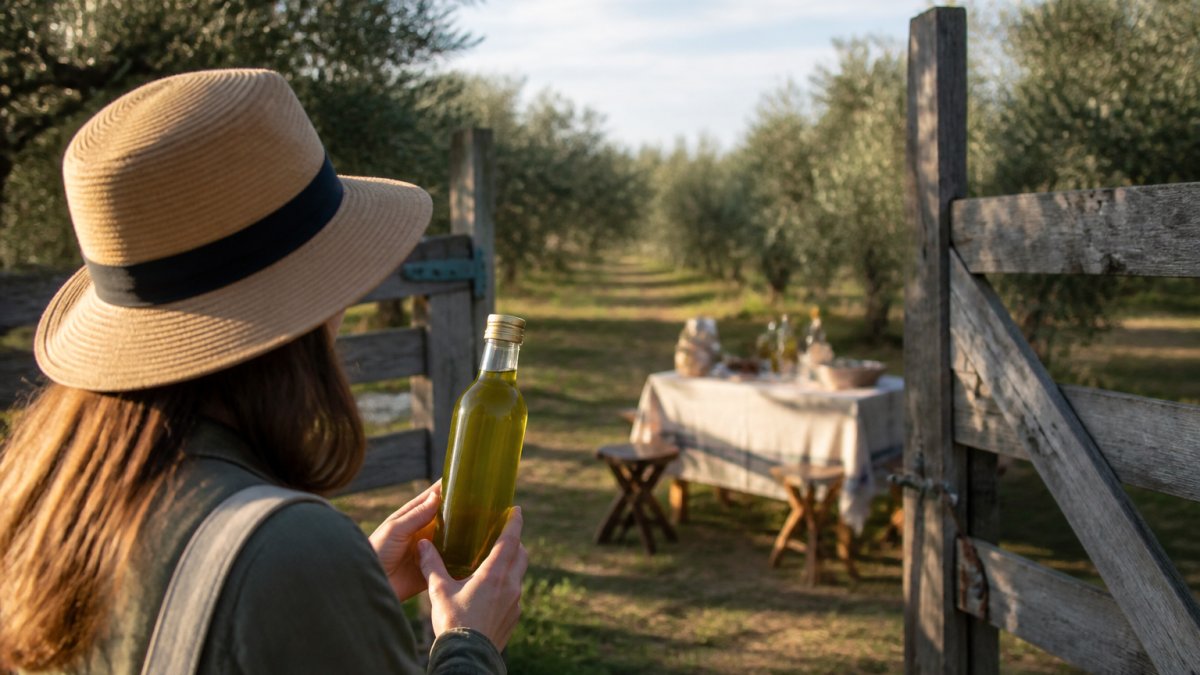
Start with the growers closest to you, then work outward. Regional olive-growing areas host family-owned groves that sell direct, often through a farm gate or an online shop with delivery. A farm gate visit lets you taste before you buy, which no label can replicate.
Northern Hemisphere Harvest Olio Nuovo (December Delivery) →
A Repeatable Method for Locating Producers
Rather than searching by brand, search by region and by the structures growers use to sell direct:
- Grower associations and regional olive bodies. Member lists are a reliable starting point because members usually press their own fruit rather than reselling.
- Farmers' markets. Ask at a stall when the last pressing was; the answer tells you more than any brochure, and stallholders often know neighbouring growers.
- Farm-gate directories and regional food trails. These list producers who welcome visitors, often with opening hours and contact details.
- Producer websites and social pages. Look for a stated harvest date, a named grove and a physical address, not just a shopping cart.
Confirming Availability Before You Travel
Farm gates are small operations, and opening hours change with the season. Before travelling, confirm three things by phone or email: that the current-season oil is available, that someone will be there to serve you, and whether tastings are offered. Harvest timing varies by region and variety, so availability in one area may be weeks ahead of another.
What to Do on a Farm-Gate Visit
Taste before you commit. Ask to try the current-season oil alongside anything older so you can taste the difference freshness makes. Ask when the fruit was picked and when it was pressed, and look at how the oil is stored on site. If you are buying in bulk, ask whether they will fill your own container and how they recommend storing it.
Where you cannot visit, a producer's online shop should state harvest dates clearly. If it does not, email and ask. The response speed is its own test of how seriously they take transparency.
Comparing Prices, Shipping Costs and Minimum Orders
Price per litre is only half the comparison. Shipping and minimum order sizes change the real cost, especially for a product you want to buy fresh and repeat.
| What to Compare | Why It Matters | What to Check |
|---|---|---|
| Price per litre | Baseline cost | Convert every bottle to the same unit |
| Shipping cost | Can outweigh a cheaper bottle | Get a delivered total, not a shelf price |
| Minimum order | Forces overbuying | Match to your realistic usage |
| Delivery frequency | Freshness on arrival | Confirm dispatch after pressing |
| Bottle vs tin | Keeping quality | Tins suit larger volumes |
A cheaper bottle with high shipping and a large minimum order is rarely cost effective. Work out the delivered price for the amount you will actually use before the oil fades.
For reference, our Northern Hemisphere Harvest Olio Nuovo is $49.00 for a 500ml bottle, with a 2 litre tin for the kitchen. That gives you a concrete benchmark to compare against any quote.
Olive Oil Storage: Keeping Freshness After Delivery
Good olive oil storage protects everything you paid for. Heat, light and air are the three enemies, and all three are easy to control.
Keep oil in a cool, dark cupboard away from the stove, with the lid firmly closed. A dark glass bottle or tin is better than a clear decanter. If you decant for the table, keep the main supply sealed.
Unfiltered oil is best enjoyed within three to six months. Filtered oil, stored well, holds its quality far longer. Buy the format that matches how fast you cook.
Conclusion
The challenge with farm-direct oil is not finding it; it is verifying freshness and buying the right volume for how you actually cook. That is exactly the problem we built Olio Nuovo around: oil pressed within 24 hours of harvest, unfiltered for vivid character, and delivered twice a year from both harvests so your bottle is never old. Our award-winning oil, including Gold at the 2025 Royal Tasmanian Fine Food Awards, comes straight from our groves to your table. Order online now and taste the difference a harvest date makes.
Frequently Asked Questions
How can you buy olive oil directly from growers?
Start with a local olive grove or producer's online shop, then check whether they sell to the public rather than only wholesale. Ask for the harvest date and milling date before ordering, and confirm minimum order sizes and delivery costs. Visiting a farm gate gives you the chance to taste before buying. Many growers also offer subscription deliveries across both the local and Northern Hemisphere harvests, so you get fresh olive oil straight to your door twice a year.
How do you know if extra virgin olive oil is fresh?
Look for a printed harvest date, not just a best-before date. Fresh oil is typically pressed within 24 hours of picking and tastes grassy, fruity and peppery at the back of the throat. Ask how the oil was stored: cool, dark and sealed. Unfiltered styles are best enjoyed within three to six months, while filtered oil kept in a cool, dark place holds quality for up to two years. If a bottle has no harvest date at all, treat the freshness claim with caution.
What should you ask an olive oil grower before buying?
Ask four things: when the olives were picked, how soon after picking they were pressed, how the oil has been stored since pressing, and how it will be packaged and shipped. Also ask whether the oil is filtered or unfiltered, which olive varieties are in the blend, and whether the grove is certified organic. A grower who can answer these plainly is showing you the transparency that separates direct buying from supermarket shelf shopping.
How should fresh olive oil be stored once it arrives?
Keep it in a cool, dark cupboard away from heat and light, with the lid firmly closed. Heat, sunlight and air are the three things that speed up staleness. Choose a bottle size you will finish in a few months rather than a large tin you cannot get through. If you buy in bulk, decant a small amount for daily use and keep the rest sealed. Good olive oil storage is the difference between oil that still tastes like harvest day and oil that tastes flat.
