

Table of Contents
- Why Buy Premium Unfiltered Olive Oil Online in 2026
- What Makes Unfiltered Extra Virgin Olive Oil Different
- How to Spot Fake or Adulterated Olive Oil Before You Buy
- Health Benefits of Extra Virgin Olive Oil: What the Science Supports
- Best Olive Oil Brands and What Separates Them
- How to Store Olive Oil So It Stays Fresh
- Pricing and Delivery: What to Expect When You Order
- Frequently Asked Questions
Last Updated: October 2, 2026
Why Buy Premium Unfiltered Olive Oil Online in 2026
Buying premium unfiltered olive oil online is the most reliable way to access fresh, seasonal oil that supermarkets cannot stock. Retail shelves carry oil blended for long shelf life, not flavour; online, you're often buying within weeks of harvest, not years.
At Olio Nuovo, we press within 24 hours of harvest and ship straight from the grove. That timing matters more than almost any other factor. The Australian Olive Association's quality guidance notes that freshness and handling determine quality more than any single label claim.

What Makes Unfiltered Extra Virgin Olive Oil Different
Unfiltered extra virgin olive oil is pressed and bottled without a filtration step, leaving natural sediment and suspended particles. That sediment carries flavour compounds and polyphenols, which is why the oil tastes greener and more intense.
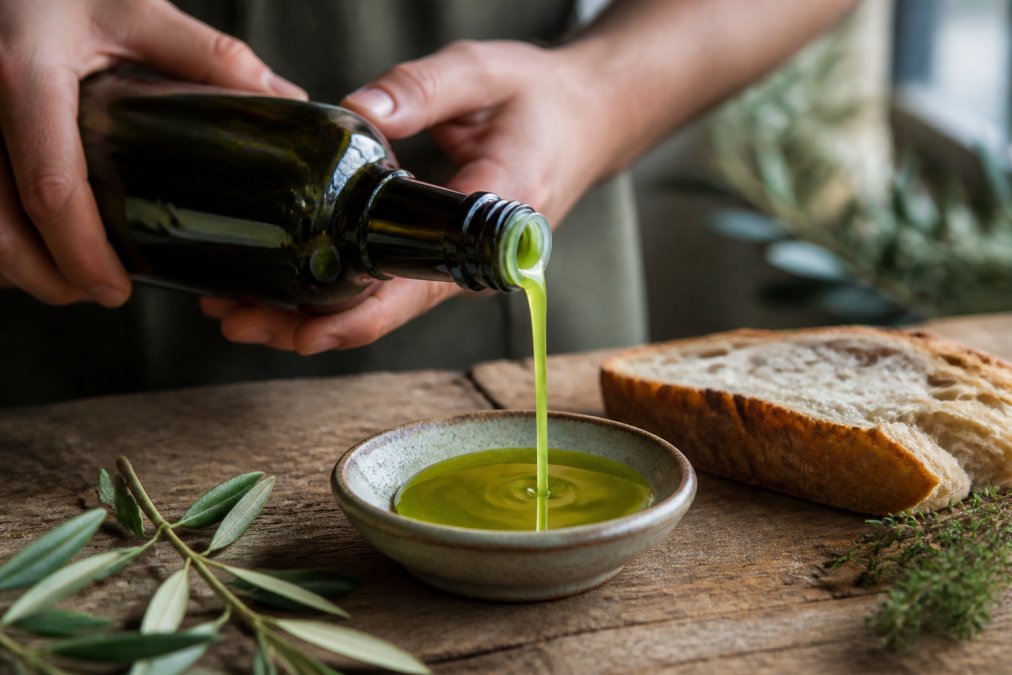
Unfiltered vs Filtered: The Technical Difference
The technical difference is what stays in the bottle. Filtration removes suspended solids, water droplets and fine pulp; unfiltered oil keeps them, which is why it looks cloudy and tastes bolder.
Here's the trade-off in practice:
| Factor | Unfiltered | Filtered |
|---|---|---|
| Appearance | Cloudy, green, sediment visible | Clear and bright |
| Flavour | Intense, peppery, grassy | Milder, rounder |
| Best enjoyed within | 3 to 6 months | Up to 2 years |
| Storage needs | Cool, dark, sealed tightly | Cool, dark, sealed tightly |
| Polyphenol retention | Higher at bottling | Slightly lower |
Polyphenols, Acidity Levels and What They Mean for You
Polyphenols are natural antioxidant compounds that contribute bitterness and that peppery catch at the back of your throat. A strong peppery finish usually signals fresh, polyphenol-rich oil.
How to Spot Fake or Adulterated Olive Oil Before You Buy
Adulteration is the biggest risk when you buy premium unfiltered olive oil online. Some sellers blend in cheaper oils and still label the bottle extra virgin. You cannot taste the difference from a product photo, so you need other signals.
Check these before you commit:
- Harvest date, not just a best-before date. A specific month and year tells you when the fruit was pressed.
- Single estate or single origin claims, which are harder to fake than vague regional labels.
- Traceability, such as grove location, cultivar names, or a batch number.
- Purity testing or third-party lab results published by the seller.
- Bottle opacity. Dark glass or tins protect oil from light exposure, which drives oxidation.
Health Benefits of Extra Virgin Olive Oil: What the Science Supports
The health benefits of extra virgin olive oil come mainly from its fat profile and antioxidant content. It is high in monounsaturated fats, particularly oleic acid, and carries vitamins A, D, E and K alongside polyphenols. As the least processed grade, it retains more of those compounds than refined oils, the core reason it sits at the centre of Mediterranean-style eating.
Polyphenols: The Active Compounds Behind the Peppery Kick
Polyphenols are a broad family of plant compounds that act as antioxidants. In olive oil, the most studied include hydroxytyrosol and oleuropein, which cause the bitterness and peppery catch many people mistake for a defect.
How Unfiltered Oil Fits In
Unfiltered oil keeps the sediment filtration removes, and that sediment carries polyphenols and flavour compounds, which is why it often tastes greener and more intense. That does not make it a medicine, it makes it a fresher, more antioxidant-rich version of an already healthy fat, provided it is genuinely fresh and stored well.
Acidity, Freshness and What Labels Actually Tell You
Acidity level measures free fatty acids in the oil. Lower is better, and extra virgin oil must sit below a set threshold to carry the grade. The International Olive Council's trade standard sets the recognised limits for extra virgin classification.
A Sensible Way to Use It
Use extra virgin oil as your default cooking and finishing fat. For high-heat cooking it is more stable than many people assume thanks to its monounsaturated fat content, though repeated heating degrades polyphenols. For dishes where you taste the oil directly, salads, bread, finished pasta, grilled vegetables, use your freshest unfiltered bottle.
Northern Hemisphere Harvest Olio Nuovo →
Best Olive Oil Brands and What Separates Them
The best olive oil brands share three traits: a stated harvest date, transparent origin, and evidence of quality testing. Price alone separates nothing.
What actually differentiates a serious producer:
- Time from harvest to press. Shorter is better. Ours is within 24 hours.
- Harvest frequency. Some producers offer one release a year. Twice-yearly harvests mean fresher oil more often.
- Awards and independent judging. Competition medals give you an outside opinion, not just a marketing line.
- Cultivar and estate detail. Named groves and olive varieties signal real traceability.
How to Store Olive Oil So It Stays Fresh
Knowing how to store olive oil matters as much as which bottle you buy. Heat, light and air push oil toward oxidation, which turns fresh oil flat and rancid. Most guides stop at 'keep it cool and dark', the real skill is understanding the mechanism so you can adapt when your kitchen or climate works against you.
Why Unfiltered Oil Oxidises Faster
Unfiltered oil carries sediment: fine pulp, water droplets and plant particles. That sediment is flavour-rich, but it also contains enzymes and moisture that keep reacting with oxygen after bottling. Filtered oil removes those particles, which is why it keeps longer, unfiltered oil is, in effect, still alive in the bottle. That is the trade-off for its intensity.
The main drivers of oxidation are:
- Light, especially UV and bright kitchen downlights, which break down chlorophyll and accelerate rancidity.
- Heat, above roughly 20°C, which speeds up every chemical reaction in the oil.
- Oxygen, introduced every time you open the bottle or leave a wide mouth exposed.
- Time, because even perfect storage only slows oxidation, it does not stop it.
A Practical Storage Protocol
Use this checklist as a starting point, then adjust for your conditions:
- Keep the bottle in a cool, dark cupboard, ideally between 14°C and 18°C, away from the stove, oven and dishwasher.
- Choose dark glass or a tin over clear glass. Tins block light completely and are the better choice for a 2 litre format.
- Close the lid firmly after every pour. A pourer spout left in place lets in a steady trickle of air.
- Skip the windowsill, the benchtop beside the kettle, and any spot above the oven.
- Use the oldest bottle first if you keep more than one open.
- Consider decanting a week's worth into a small dark bottle and keeping the main container sealed.
How to Tell If Oil Has Gone Off
Oxidation is progressive, not instant. Early signs are a loss of peppery bite and a flatter, slightly waxy aroma; later, a smell like crayons, old nuts or wet cardboard. If the oil tastes greasy rather than clean, it has turned.
Pricing and Delivery: What to Expect When You Order
Pricing for premium unfiltered oil reflects freshness, not volume: oil pressed recently, bottled quickly, and shipped without sitting in a warehouse.
- Harvest date and origin transparency
- Bottle or tin format, since tins protect oil better than clear glass
- Delivery timing relative to harvest
- Whether you can subscribe and receive fresh oil automatically
Frequently Asked Questions
What is the difference between filtered and unfiltered olive oil?
Unfiltered olive oil is bottled with natural sediment still present, giving it a cloudy appearance, intense green colour and a bold, peppery finish. Filtered oil has had those particles removed, so it looks clear and bright. Unfiltered is best enjoyed within 3 to 6 months for peak flavour, while filtered oil stored in a cool, dark place keeps its quality for up to 2 years.
Does unfiltered olive oil have a shorter shelf life?
Yes. Because unfiltered olive oil still contains fruit particles, those particles can ferment over time and speed up oxidation. For the best sensory experience, use it within 3 to 6 months of opening. If you prefer a longer shelf life, a filtered version of the same oil can last up to 2 years when kept in a cool, dark cupboard away from heat and light.
How can you tell if premium olive oil is authentic?
Check for a visible harvest date rather than a vague best-before, look for single-estate or single-origin labelling, and note whether the bottle is dark glass or a tin to protect against light exposure. A genuine early-harvest oil should deliver a peppery kick at the back of your throat, which comes from naturally occurring polyphenols. Awards and third-party purity testing are also useful signals of authenticity.
How should premium unfiltered olive oil be stored to maintain freshness?
Keep your bottle in a cool, dark cupboard away from the stove, with the lid firmly closed. Light and heat are the two biggest drivers of oxidation. If you buy a larger tin, decant a small amount into a dark glass bottle for daily use and keep the rest sealed. Never store olive oil above the fridge or in direct sunlight, and use it within 3 to 6 months of opening for the best flavour.
