
Quick Summary
The best olive oil tasting notes for steak are grassy and herbal top notes, a fruity middle, and a peppery finish that cuts through fat. That combination lifts a rich steak instead of smothering it. At Olio Nuovo, we press within 24 hours of harvest, so the notes stay bright and clear.
- Name fruitiness, bitterness and pungency first before any other tasting notes.
- Slurp a small amount and hold it to release aroma, then wait for the peppery throat catch.
- Match strong grassy, bitter, peppery oils to ribeye, scotch fillet and chargrilled cuts.
- Use medium-bodied oil for cooking and save your boldest, freshest oil for finishing off the heat.
- Taste oil on a plain, salt-only steak slice so the oil is the only variable.
Table of Contents
- Why Olive Oil Tasting Notes Matter for Steak
- How to Taste Extra Virgin Olive Oil Before It Meets the Steak
- Reading the Notes: Grassy, Herbal, Fruity and Peppery Olive Oil for Steak
- Choosing the Best Olive Oil for Finishing Steak
- Using Olive Oil for Cooking Steak: What Changes on the Heat
- Pairing Notes by Cut, Seasoning and Cooking Method
- A Repeatable Tasting-Note Template and the Defects to Watch For
- Building Your Steak Tasting Flight With Olio Nuovo
- Frequently Asked Questions
What Are the Best Olive Oil Tasting Notes for Steak?
Last Updated: November 4, 2026
The best olive oil tasting notes for steak are grassy and herbal top notes, a fruity middle, and a peppery finish that cuts through fat. That combination lifts a rich steak instead of smothering it. At Olio Nuovo, we press within 24 hours of harvest, so the notes stay bright and clear. Below, we show you how to taste oil, read its notes, and match a bottle to your cut.
Why Olive Oil Tasting Notes Matter for Steak
Steak is fatty, savoury and salty. Olive oil is fruity, bitter and peppery. The clash is the point.
A good finishing oil adds a fresh edge that salt alone cannot.
So the notes you pick change the plate. Grassy and peppery notes wake up a rich ribeye.
Olive oil tasting is the simple act of smelling and sipping oil to name its flavours.
How to Taste Extra Virgin Olive Oil Before It Meets the Steak
Taste the oil on its own first. If you only taste it on steak, the meat hides the faults. A clean, solo taste tells you what the oil will add, and it gives you a baseline to compare against the same oil drizzled over beef later.
Setting Up a Fair Tasting
Keep it simple and consistent. The goal is to remove variables so the only thing changing is the oil.
- Use small glasses or tasting cups, one per oil. A dark glass hides colour, which is not a reliable guide to quality anyway.
- Pour a thin layer, about a tablespoon. Too much oil coats the mouth and blunts the finish.
- Cover each cup and let it sit for a minute so the volatile aromas collect under the lid.
Label each cup so you do not lose track. Taste from mild to bold so the strong oils do not overpower the light ones. If you taste bold first, the delicate oil that follows will seem flat and watery even when it is perfectly fresh.
The Slurp, the Hold and the Finish
A useful solo taste has three stages, and each one tells you something different.
- Smell before you sip. Bring the cup to your nose and take a short sniff, then a longer one. Name the first thing that comes to mind, cut grass, green apple, almond, tomato leaf, fresh herbs. First impressions are usually the most accurate.
- Slurp a small amount. Draw the oil across your tongue with a little air, the way you would taste wine. This spreads the oil and releases aroma into the back of your nose. Hold it for a few seconds.
- Swallow and wait for the finish. The throat catch, the peppery tickle that may make you cough, is pungency. It usually arrives a second or two after you swallow. Note how long it lasts.
Between oils, take a bite of plain bread or a sip of water and wait a few seconds.
Watch out: if you taste oil immediately after coffee, strong cheese or garlic, the aromas carry over and you will misread the oil. Leave a gap of at least ten minutes, or taste before those foods rather than after.
The Three Attributes to Name First
Every oil is scored on three things. Name these before anything else:
- Fruitiness, how ripe or green the fruit smells and tastes. Green fruitiness leans toward grass, herbs and green apple; ripe fruitiness leans toward softer, rounder notes.
- Bitterness, the clean, green bite on the back of your tongue. It is a taste, not an aroma, and it sits on the palate rather than in the nose.
- Pungency, the peppery catch in your throat that makes you cough. It is a physical sensation, not a flavour, and it is the note most often confused with heat from chilli.
Bitterness and pungency are often signs of fresh, early-harvest oil rather than faults. A steak can handle a little of both, because fat softens bitterness and carries aroma.
For a full walk-through, see our guide on how to taste olio nuovo properly.
Reading the Notes: Grassy, Herbal, Fruity and Peppery Olive Oil for Steak
Here is how to translate what you taste into words you can use.
Grassy notes smell like cut lawn or green leaves.
Herbal notes lean toward fresh herbs, tomato leaf or artichoke.
Fruity notes range from green apple and almond to ripe stone fruit.
Floral notes are light and perfumed.
Peppery notes are the spicy catch in your throat.
Curious why some oils bite back? Read why olive oil tastes peppery.
Choosing the Best Olive Oil for Finishing Steak
The best olive oil for finishing steak is a strong, early-harvest oil with grassy and peppery notes.
Match the style to the plate:
| Oil style | Notes to expect | Best for |
|---|---|---|
| Delicate | Soft, buttery, floral | Lean fillet, light seafood |
| Medium-bodied | Green fruit, fresh herbs | Most everyday steaks |
| Strong | Grassy, bitter, peppery | Ribeye, scotch fillet, chargrilled cuts |
Freshness matters a great deal. Check the harvest date, store the bottle away from heat and light, and use it within a few months of opening.
Northern Hemisphere Harvest Olio Nuovo (December Delivery) →
A finishing oil is added at the end, off the heat. A drizzle over rested steak keeps every note intact.
Using Olive Oil for Cooking Steak: What Changes on the Heat
Heat softens the delicate notes and mutes the aroma. That is why a showpiece oil belongs on the plate, not in the pan.
For cooking, use a medium-bodied oil. It handles the pan well and still adds flavour. Save your boldest, freshest oil for the finish.
A few practical rules:
- Pat the steak dry before it hits the pan
- Oil the steak, not just the pan, for an even crust
- Do not let the oil smoke; if it does, the pan is too hot
For more ways to keep flavour intact, try these ways to cook with artisanal olive oil without losing flavour.
Pairing Notes by Cut, Seasoning and Cooking Method
Different cuts and methods call for different notes. The reason is fat, salt and heat: fat carries aroma, salt sharpens bitterness, and heat either mutes or concentrates the oil's volatile notes. Once you know how those three forces behave, you can match any cut without a lookup table.
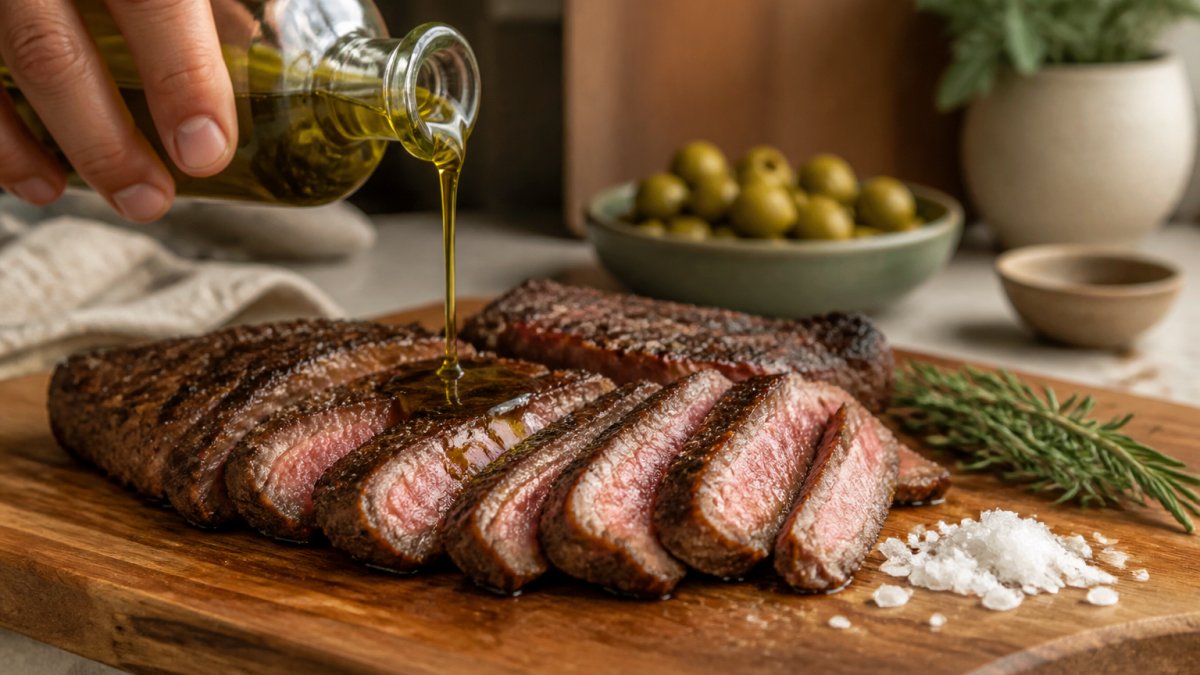
Matching the Oil Style to the Cut
- Ribeye, pan-seared: strong, peppery oil with a crack of salt. The heavy fat needs a note that can cut through it; a delicate oil disappears under the beef.
- Scotch fillet, chargrilled: grassy, herbal oil with rosemary. The char adds smoke, and grassy notes sit alongside it rather than fighting it.
- Fillet, roasted: medium-bodied, fruity oil with a light hand. Lean meat has less fat to carry a bold oil, so a softer style keeps the plate balanced.
Why Seasoning Changes the Match
Seasoning is not neutral. It competes with the oil for your attention.
- Salt and pepper only: lets a fruity or grassy oil lead. This is the best setup for comparing oils, because nothing else masks the notes.
- Garlic and herb rub: loves herbal and grassy notes. A floral oil can clash here, because perfume and garlic pull in different directions.
- Chilli or smoky spice: a peppery oil doubles the heat sensation, which some eaters love and others find too much. A medium-bodied oil is the safer match.
A simple rule: the more seasoning on the steak, the simpler the oil should be. Let one element carry the aroma.
How Cooking Method Shifts the Notes
Grilling and charring add smoke and concentrated savoury notes. Grassy and herbal oils sit comfortably alongside smoke; floral oils tend to get lost.
Pan-searing builds a dark crust and a buttery, fatty finish.
Roasting is gentler and more even. A medium-bodied, fruity oil works across the whole roast, and a stronger oil can be added at the end for contrast.
Tasting Oil on Steak Versus Cooking Steak With Oil
These are two different jobs. Cooking oil takes the heat; finishing oil takes the credit.
When you cook with oil, much of the aroma cooks off and the oil's main job is heat transfer and crust formation.
So taste both ways.
Watch out: if you taste a finishing oil on a heavily seasoned or sauced steak, you are tasting the seasoning, not the oil.
A Repeatable Tasting-Note Template and the Defects to Watch For
Use the same notes every time so you can compare oils fairly. Copy this template:
- Oil and harvest date:
- Aroma: grassy / herbal / fruity / floral
- First taste: bitter / sweet / flat
- Finish: peppery / mild / none
Now watch for faults. A rancid oil smells like old nuts, crayons or a musty cupboard. A muddy or waxy taste is another warning sign. Defects get worse with heat and light, so store oil cool and dark.
Hosting a group? Our guide to hosting an olive oil tasting party at home walks you through a structured tasting.
Building Your Steak Tasting Flight With Olio Nuovo
Taste two or three oils side by side to find your favourite. Start mild, finish bold, and keep notes on each.
Our Northern Hemisphere Harvest Olio Nuovo is a natural fit for a steak flight. You can also browse the full Olio Nuovo range to compare styles before you commit to a bottle.

Best for: finishing ribeye, scotch fillet and chargrilled cuts. Skip if: you want a neutral oil for high-heat frying only.
A tasting flight lets you compare styles and pick the bottle that suits your kitchen.
Frequently Asked Questions
What olive oil goes best with steak?
A robust, peppery extra virgin olive oil suits most steak cuts because its bitterness and pungency cut through rich fat. Grassy and herbal notes echo char and rosemary-style seasoning, while a medium-bodied oil with almond and artichoke notes works better on leaner cuts or delicate sauces. The reliable test is olive oil tasting on the cooked meat itself: try two oils side by side on the same steak and note which one leaves a cleaner, longer finish.
Should you put olive oil on steak before or after cooking?
Both work, but they do different jobs. A light coat before cooking helps seasoning cling and supports browning in the pan. Olive oil for cooking steak should be treated as a working oil, not the star. The flavour you actually want to taste is best added after the steak rests, when a drizzle of finishing oil hits warm meat and releases its aroma without the heat dulling the more delicate notes.
What do peppery and bitter olive oil tasting notes mean?
Bitterness is a taste picked up on the sides and back of the tongue, and pungency is the peppery catch at the back of the throat that can make you cough. Both come from fresh early-harvest oil and are signs of freshness rather than faults. A peppery olive oil for steak is usually the right match for fatty cuts, because that assertive finish resets the palate between bites.
Can you cook steak in extra virgin olive oil?
Yes. Extra virgin olive oil is widely used for pan-searing steak. Its smoke point sits well above the temperatures used for a normal sear, so a hot pan is not a problem. Keep the cooking oil simple and save your most distinctive bottle for the plate. That way the tasting notes you paid for end up on your palate rather than in the pan.
Ready to taste the difference fresh oil makes? At Olio Nuovo, we press within 24 hours of harvest and deliver twice-yearly harvests, filtered or unfiltered, so the notes stay bright. Explore our award-winning extra virgin olive oil and build your own steak tasting flight. Get started with Olio Nuovo and find the bottle that lifts your next steak.

