
Last Updated: October 30, 2026
Quick Summary
To host an olive oil tasting party at home, pick three to five extra virgin olive oils that differ in clear ways, label them with letters, and serve them from mildest to most robust. Serve each oil at room temperature in small pours with plain bread and water, and keep the session to about 60 to 90 minutes.
- Choose three to five extra virgin oils; more than five blurs the differences guests should notice.
- Label bottles A, B, C and D and hide their identities until the end to avoid bias.
- Serve oils at room temperature, taking them out about an hour before guests arrive.
- Pour about a teaspoon per oil and taste from mildest to most robust, using plain bread and water between samples.
- Plan for about 60 to 90 minutes, with around 30 minutes devoted to the tasting itself.
Table of Contents
- What Makes an Olive Oil Tasting Party Worth Hosting
- How Many Oils to Choose and Where to Source Them
- How to Taste Olive Oil Properly at Home
- Building an Olive Oil Tasting Party Menu
- Using an Olive Oil Tasting Scorecard Your Guests Will Enjoy
- How Long Should an Olive Oil Tasting Party Last?
- Booking Your Fresh Olio Nuovo Oils for Your Next Gathering
- Frequently Asked Questions
How to Host an Olive Oil Tasting Party at Home
What Makes an Olive Oil Tasting Party Worth Hosting
An olive oil tasting party is a relaxed way to taste several extra virgin olive oils side by side and learn what sets them apart.
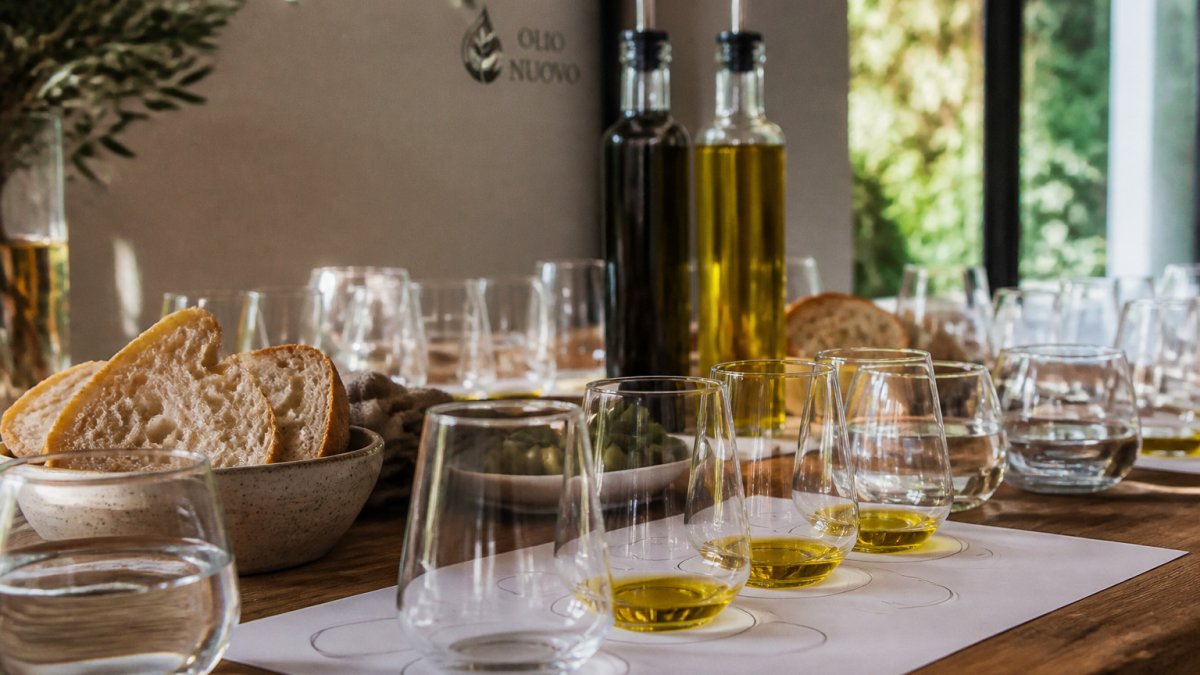
Most guests expect olive oil to taste the same from bottle to bottle. A tasting shows them otherwise.
Hosting is also easy. You need a few small glasses, plain bread, a clean table and a short plan.
How Many Oils to Choose and Where to Source Them
Three to five oils is the right number for most gatherings. More than five tires the palate and blurs the differences you want guests to notice. Four is a comfortable sweet spot: enough variety for interesting comparisons, few enough that each oil gets proper attention.
Build a flight that teaches something
Choose oils that differ in one clear way at a time, so guests can isolate what they are tasting. A reliable structure is:
- One mild, buttery oil, usually a delicate variety picked earlier and pressed gently. Good as the entry point.
- One medium, herbaceous oil, green almond, artichoke and cut-grass notes. The workhorse of most flights.
- One robust, peppery oil, the one that catches at the back of the throat and wakes everyone up.
Label each bottle with a letter (A, B, C, D) and keep the identities hidden until the end. This blind-tasting principle, used by professional panels, stops price and packaging from doing the judging for your guests.
Understand the grades before you shop
Not every bottle on the shelf is worth tasting. The grades that matter for a tasting party:
- Extra virgin olive oil, made from olives by mechanical means only, without heat or chemical solvents, and required to meet strict chemical and sensory standards. The only grade worth building a tasting around.
- Virgin olive oil, also mechanically produced but with higher permitted acidity and more sensory defects. Rarely seen on Australian shelves.
- Refined or "pure" olive oil, refined to remove defects, then blended with a little virgin oil. Neutral and fine for frying, but no personality to taste.
If a bottle does not say "extra virgin" clearly, leave it out of the flight.
Freshness beats price every time
Freshness matters more than price. Look for a harvest date on the label, not just a best-before date, and aim for oil from the most recent season. Olive oil is a fruit juice that fades after pressing, and the brightness, green aromas and pepper that make a tasting exciting are the first to go.
Our Northern Hemisphere Harvest Olio Nuovo is pressed early in the season, so it arrives fresh. You can see the December delivery timing for the Northern Hemisphere harvest before you order.

Budget-friendly versus premium sourcing
You do not need to spend up big to run a good tasting. A practical split for a group of six to eight:
- Budget approach, two fresh, well-priced extra virgin oils from a local producer or farmers' market plus one supermarket extra virgin with a clear harvest date. The contrast between a fresh local oil and a mass-market one is often the most instructive moment of the night.
- Premium approach, build the flight around early-harvest and single-variety oils, where differences in polyphenols, bitterness and pungency are most pronounced.
- The hybrid most hosts land on, one or two premium oils as the centrepiece, supported by two solid everyday extra virgins.
Whatever you spend, buy smaller tins or bottles than you think you need. A 500ml tin opened for a tasting and left half-full will be flatter by the next gathering than a fresh smaller format.
Keep the selection balanced
Include at least one oil with a strong pepper finish so guests can feel the difference clearly, and avoid stacking the flight with three oils of the same style. Variety in intensity, variety and origin keeps the conversation flowing.
The grades that matter for a tasting party are easy to mix up, so here is how they compare.
| Grade | Made by | Best use |
|---|---|---|
| Extra virgin olive oil | Mechanical means only, no heat or solvents | Tasting flight |
| Virgin olive oil | Mechanical means, higher acidity | Rarely seen on Australian shelves |
| Refined or pure olive oil | Refined, then blended with virgin oil | Frying, neutral cooking |
| Olive pomace oil | Solvent extraction from leftover paste | Cooking only |
How to Taste Olive Oil Properly at Home
Professional tasters follow a set method, and you can use a simplified version at home. Pour about a teaspoon of each oil into a glass and warm it slightly by cupping the glass in your palm.
Follow these four steps for every oil:
- Look: Check the colour and clarity. Colour alone says little about quality, but it helps guests notice differences.
- Smell: Cup the glass and breathe in deeply. Note grass, herbs, fruit or nuts.
- Sip: Take a small sip and draw air across it with a gentle slurp. This spreads the oil over the palate.
The chemistry, in plain terms
A little science makes the tasting more interesting and gives guests a reason to trust their own palate.
- Free acidity measures how much the oil has broken down. Lower is better, and extra virgin oil must sit below a strict threshold to carry the name. You cannot taste acidity directly, it is a lab measure, but it tracks with freshness and careful handling.
- Peroxide value measures oxidation, the process that turns oil flat and rancid. A low peroxide value means the oil has been protected from air, light and heat.
- Polyphenols are the plant compounds behind bitterness and that peppery catch at the back of the throat. They are why a fresh, robust oil makes some guests cough on their first sip, and why that cough is not a bad sign.
You do not need to quote numbers at the table. The point is that bitterness and pungency are not flaws to be apologised for; they are the sensory signature of a fresh, well-made oil.
Troubleshooting the mistakes that ruin a tasting
Most disappointing tastings come down to a handful of avoidable errors:
Northern Hemisphere Harvest Olio Nuovo (December Delivery) →
- Serving the oil too cold. Cold dulls aroma and masks pepper. Take bottles out an hour before guests arrive and let them come to room temperature.
- Using the wrong bread. Soft, sweet sandwich bread blunts the oil. Use plain, crusty sourdough or unsalted crackers in small pieces so guests are not filling up.
- Pouring too much. A teaspoon is plenty. Large pours overwhelm the palate and make the fourth oil taste like the first.
A scorecard built like a professional one
A casual one-to-five score is fine for a relaxed night, but if you want the tasting to feel like a proper evaluation, borrow the structure professional panels use. A useful home scorecard has:
- A positive-attributes column, fruitiness (green or ripe), bitterness and pungency, each scored separately. These are the three attributes panels assess in extra virgin oil.
- A defects column, a simple yes/no for rancid, muddy or winey notes. Most guests will not find these, but the column teaches them what to look for.
- A balance score, how well the fruit, bitterness and pepper sit together.
Print one sheet per guest with the oils labelled A to D and leave the identities blank until the reveal. The structure slows people down and gives the group a shared vocabulary for the discussion afterwards.
Setting Up Glasses, Tasting Mats and Palate Cleansers
Use small, clear tasting glasses, one per oil per guest. Clear glass lets guests see the colour, and the small size keeps pours modest.
Keep plain, crusty bread and still water on the table as palate cleansers. Guests should taste from the mildest oil to the most robust, rinsing with water or bread between samples so the flavours do not blur.
Scoring Aroma, Flavour and Finish
Ask guests to score each oil from one to five on aroma, flavour and finish. Aroma covers the grassy, herbal or fruity smells; flavour covers the taste on the palate; finish describes the pepper or bitterness that lingers.
Keep notes short. Words like "green banana", "artichoke" or "black pepper" work well and give the group a shared language.
Building an Olive Oil Tasting Party Menu
Serve food that lets the oils shine. For more on why premium olive oil is better for cooking, see our companion article.
Pair the oils with the food in a simple way:
- Mild oils: soft cheese, roasted pumpkin and fresh bread.
- Peppery oils: grilled meat, bitter greens and tomatoes.
- Herbal oils: salads, fish and fresh herbs.
Plan the menu so the oils appear in the same order as the tasting. If you want to keep the tasting going beyond one gathering, you can join the Olio Nuovo Club for fresh-pressed oil twice a year.
Using an Olive Oil Tasting Scorecard Your Guests Will Enjoy
A scorecard makes the tasting feel like a game and gives guests something to focus on. Print a sheet with each oil's letter, then leave three columns for aroma, flavour and finish.
At the end, tally the scores and let the group vote on the winner. Many guests are surprised their favourite is not the most expensive oil, often the highlight of the evening.
How Long Should an Olive Oil Tasting Party Last?
Plan for about 60 to 90 minutes. That gives guests enough time to taste each oil slowly without losing focus. Allow extra time for conversation and food.
Keep the tasting section to around 30 minutes, then let guests relax with the menu. A shorter, focused tasting leaves people wanting more.
Booking Your Fresh Olio Nuovo Oils for Your Next Gathering
Fresh oils make the strongest tasting party. You can also browse the full Olio Nuovo fresh harvest extra virgin olive oil range to pick a balanced set of three to five oils.
If you want to keep tasting beyond one gathering, you can explore the Olio Nuovo range for fresh-pressed oil.
Ready to host? Explore premium extra virgin olive oil at olionuovo.com.au and start planning your tasting.
Frequently Asked Questions
How do you host an olive oil tasting party at home?
Start by choosing two to five extra virgin olive oils, ideally from different harvests or regions so the differences are easy to notice. Pour small portions into clear, identical tasting glasses or small bowls, label each one with a number, and keep them away from direct light. Provide plain bread, water and unsalted crackers as palate cleansers, and give each guest a simple scorecard to note aroma, flavour and finish. Keep the room well ventilated and avoid strong perfumes, which can mask the oil's aroma.
How many olive oils should you serve at a tasting?
Three to five oils is a good range for a home gathering. Fewer oils make comparison easy, while more than five can overwhelm the palate and make later samples hard to assess. Serve them in a set order, often from mildest to most robust, and include a numbered key that guests reveal only after they have scored each oil. Mixing a fresh early-harvest oil with a few established oils gives a clear sense of how freshness changes the flavour.
How do you taste olive oil properly?
Warm the oil slightly by cupping the glass in your palms, then swirl it gently and smell it to assess aroma. Take a small sip, then slurp air through the oil so it spreads across the palate, and note fruitiness, bitterness and pungency. Pay attention to the peppery finish at the back of the throat, which indicates polyphenol content. Rinse your palate with bread or water before moving to the next oil.
How long should an olive oil tasting party last?
A relaxed tasting party usually runs about 60 to 90 minutes. This allows time for setup, a guided walkthrough of the first oil, the tasting itself and a short discussion of scores. Shorter sessions suit guests who are new to olive oil, while longer evenings work well when food pairings are included. Breaks between oils help palates reset and keep guests focused on the flavours rather than fatigue.

