

Table of Contents
- Nicholson Saville Olive Oil Review
- Cobram Estate Olive Oil Review
- Head-to-Head Comparison: Harvest, Pressing, and Freshness
- Flavour Profile and Culinary Uses
- How to Choose Olive Oil for Your Needs
- Storage, Freshness, and Quality Indicators
- Conclusion
- Frequently Asked Questions
Last Updated: October 18, 2026
Nicholson Saville Olive Oil Review
Nicholson Saville produces extra virgin olive oil that appeals to those seeking a reliable, established brand in the premium segment, making it a natural choice for an olive oil comparison with larger-scale producers. The company has built its reputation on consistent quality and accessibility within the Australian market. Their oil is typically available in standard glass bottles and distributed through specialty retailers and online channels.
The brand focuses on delivering a straightforward extra virgin product without emphasising the ultra-premium positioning of smaller, artisanal producers. Nicholson Saville's approach centres on proven methods and broad market appeal rather than limited-release, seasonal offerings. For everyday premium cooking and finishing applications, their oil provides a dependable choice at a mid-to-premium price point.
Key characteristics include a balanced flavour profile suited to various culinary applications. The oil works well for salad dressings, light cooking, and general kitchen use. Nicholson Saville's distribution network means consistent availability, which appeals to customers who value reliability over exclusivity. Their product positioning emphasises quality without the premium pricing associated with ultra-fresh, single-harvest expressions.
Cobram Estate Olive Oil Review
Cobram Estate stands as one of the largest and most recognised olive oil producers in the region, known for volume production and wide distribution. The brand emphasises modern processing techniques and a simplified approach to olive oil manufacturing. Their oils are available across major supermarkets and specialty retailers, making them highly accessible to mainstream consumers.
The company's product range includes both standard and premium expressions, though their core positioning remains focused on delivering quality at scale. Cobram Estate's processing methods prioritise efficiency and shelf stability, which supports their extensive distribution network. This approach means their oils are engineered for consistency across large production runs rather than capturing the peak of a single harvest.
Flavour profiles from Cobram Estate tend toward the approachable end of the spectrum, not bland, but balanced for broad consumer preference. Their oils work across cooking applications and finishing uses. The brand's strength lies in reliability, availability, and recognisable quality assurance across their range. For consumers seeking a premium option without seeking out specialist retailers, Cobram Estate provides familiar, accessible choice.
Head-to-Head Comparison: Harvest, Pressing, and Freshness
A true side-by-side of these two brands has to start with what is verifiable on the label and in public producer documentation, and then be honest about what is not. The table below separates confirmed product facts from reasonable inference, so you can see exactly where the two oils diverge.
| Aspect | Cobram Estate | Nicholson Saville |
|---|---|---|
| Business model | Large-scale grower, miller and bottler with its own groves and modern milling | Established premium brand sourcing and bottling extra virgin olive oil for retail and specialty channels |
| Stated production approach | Emphasises fresh-pressing and modern extraction, with harvest-date labelling on core ranges | Emphasises consistent quality control and proven methods rather than single-harvest, limited-release expressions |
| Harvest-to-press window | Producer documentation describes pressing close to harvest for its fresh ranges; exact hours are not published for every SKU | Not publicly specified per batch; standard commercial timeline is the reasonable assumption |
| Packaging | Predominantly dark glass and tinted bottles across the core range, with some larger formats | Standard glass bottles, typically dark, in retail and specialty formats |
| Freshness signalling | Harvest date and best-before information printed on many labels | Best-before date is the primary freshness signal; harvest date is not consistently emphasised |
| Availability | Major supermarkets, specialty retailers and online, year-round | Specialty retailers and online channels, with consistent but narrower distribution |
What this means in practice. The single most useful freshness indicator on either bottle is the harvest date, not the best-before date. A best-before date tells you when the producer expects flavour degradation to become noticeable; a harvest date tells you when the olives were actually picked.
The second differentiator is packaging format. Dark glass slows photo-oxidation, and both brands lean on it for their core ranges.
The third is distribution model. A large-scale producer with its own groves and milling can press close to harvest and still supply supermarkets year-round, because volume and logistics are built in. A brand that sources and bottles can achieve excellent quality, but the harvest-to-shelf timeline depends on its supply agreements rather than its own mill.
Australian Olive Association industry information on olive oil grades and labelling
For a direct answer to this olive oil comparison: if you want the widest availability and the most transparent harvest-date labelling, the large-scale producer has the edge. If you want a narrower, specialty-channel product with a balanced, reliable profile, the established premium brand is the more natural fit.
Flavour Profile and Culinary Uses
Flavour in extra virgin olive oil is driven by three things: olive variety, harvest timing and extraction method.
Cobram Estate. The core range is built for broad appeal: mild to moderate fruitiness, a gentle peppery finish and low bitterness. That profile comes from picking at a point that balances oil yield against intensity, and from blending varieties for consistency across large production runs.
Nicholson Saville. The brand positions itself slightly further up the premium scale, and its oils tend to show more pronounced fruitiness and a touch more complexity in some expressions. Where a specific bottle names a variety or regional character, expect a greener, more herbaceous note and a firmer peppery finish than the mainstream competitor.
How to match oil to dish. A practical rule most cooks converge on is to use the mildest oil for heat and the boldest oil for finishing:
- High-heat roasting and frying: the milder, more neutral profile, so the oil does not overwhelm the food.
- Everyday dressings and marinades: either brand works; choose the one whose pepperiness you enjoy raw.
- Finishing raw or warm dishes: the more herbaceous, peppery expression, where the oil is a seasoning rather than a cooking medium.
- Baking: a mild oil, so the olive character does not compete with sugar and butter notes.
A freshness caveat that changes the flavour conversation. Bitterness and pepperiness are not flaws; they are markers of polyphenol content, and they fade with time. An oil that tasted vibrant and peppery at pressing can taste flat six to twelve months later, even in a dark bottle.
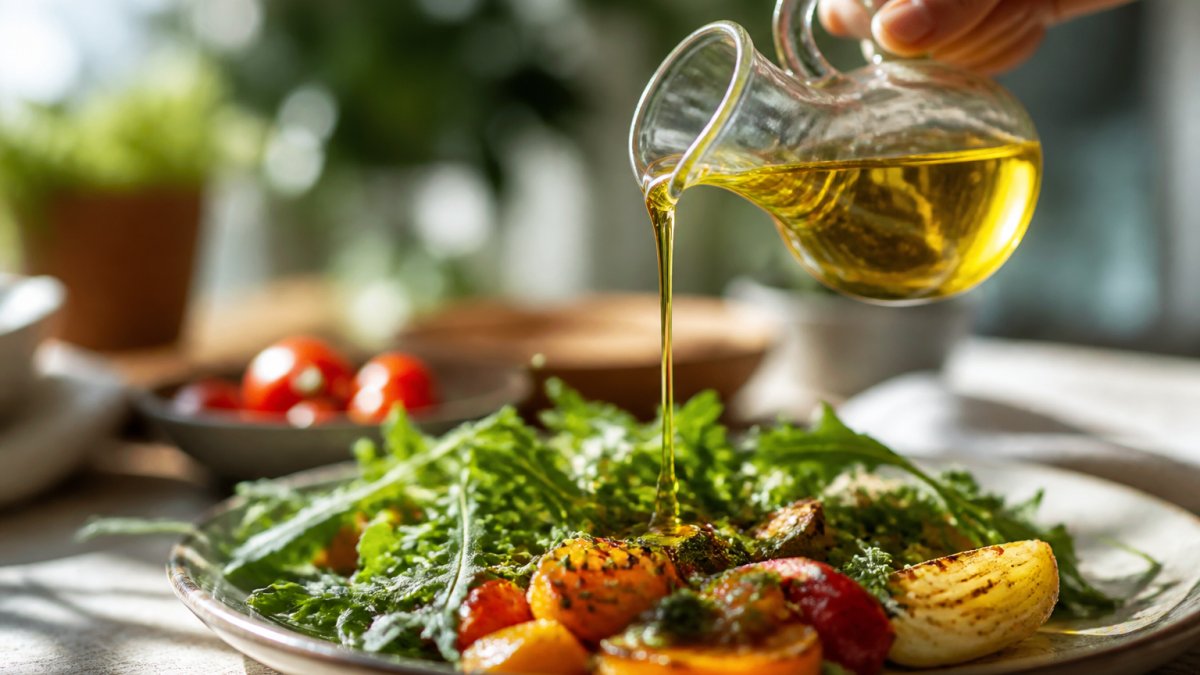
The practical takeaway: choose the milder, widely available oil for cooking and the more characterful, specialty-channel oil for finishing, and let the harvest date on the bottle override the marketing copy on the front.
How to Choose Olive Oil for Your Needs
Start by clarifying your intended use. Cooking oils and finishing oils demand different qualities. For high-heat cooking, you need an oil with a higher smoke point and stability, both Cobram Estate and Nicholson Saville suit this purpose. For finishing, where the oil's flavour becomes part of the dish, freshness and polyphenol content matter more.
Next, consider your budget and purchasing frequency. Cobram Estate and Nicholson Saville are available in standard retail channels, often at consistent pricing. Fresh-pressed oils like Olio Nuovo typically cost more and arrive on a seasonal schedule, twice yearly, which requires planning but ensures peak quality at purchase.
Examine the harvest date and pressing date on the label. Oils pressed within weeks of purchase are fresher than those pressed months earlier. A best-before date tells you when the producer expects flavour degradation to become noticeable. Oils in dark glass bottles age better than those in clear bottles, which degrade faster under light exposure.
Consider your palate preference. If you enjoy bold, peppery, grassy notes, fresh-pressed oils deliver. If you prefer subtle, approachable flavours that don't dominate dishes, established brands like Cobram Estate and Nicholson Saville are more suitable. There's no "better" choice, only the one that matches your cooking style and flavour preferences.
Storage, Freshness, and Quality Indicators
Olive oil degrades through three main mechanisms: oxidation (exposure to oxygen), light exposure (particularly ultraviolet light), and heat. Dark glass bottles protect against light; cool, dark storage protects against heat; minimal headspace in the bottle reduces oxygen contact.
Check the harvest date or production date on the label. Oils pressed in the previous calendar year are older than those from the current year. A harvest date tells you exactly when the olives were picked; a production date tells you when pressing occurred.
Look for a best-before date. Producers estimate when flavour degradation becomes noticeable based on storage conditions. Oils in dark bottles at cool temperatures last longer than those exposed to light or heat. Once opened, use the oil within 1-2 months for best flavour.
Unfiltered oils contain fine sediment and particles, which some consumers view as a sign of purity and others as a flaw. Unfiltered oils oxidise slightly faster due to increased surface area of particles, but the difference is modest with proper storage. Filtered oils appear clearer and store slightly longer.
Taste and aroma are reliable quality indicators. Fresh, high-quality extra virgin olive oil should taste vibrant, not flat. Peppery, grassy, or fruity notes indicate active polyphenols. A rancid, musty, or "crayon-like" smell signals oxidation and means the oil has degraded beyond acceptable quality. Trust your senses, if it tastes off, it is.
Conclusion
Choosing between established brands and fresh-pressed alternatives depends on your priorities. Cobram Estate and Nicholson Saville deliver reliable, accessible premium olive oil suited to everyday cooking and general kitchen use. For those seeking peak freshness, distinctive character, and maximum polyphenol content, fresh-pressed oils like Olio Nuovo, pressed within 24 hours of harvest and arriving twice yearly, offer a fundamentally different expression of quality. At Olio Nuovo, we've built our approach around capturing the vibrant, lively character that emerges only when olives move from grove to press within a single day. Our unfiltered extra virgin oils retain vitamins A, D, E, and K alongside exceptional polyphenol levels, delivering both flavour and nutritional density. If you're ready to experience the difference that true freshness makes, explore our seasonal harvest releases and discover why connoisseurs prioritise oils pressed at peak ripeness over those engineered for shelf stability.
Frequently Asked Questions
How does Nicholson Saville olive oil compare with Cobram Estate?
Both produce premium extra virgin olive oils, but they differ in harvest timing, production methods, and flavour intensity. Nicholson Saville emphasises early-harvest characteristics, while Cobram Estate focuses on consistent, balanced profiles suited to everyday use. Your choice depends on whether you prefer bold, peppery oils for finishing or milder oils for cooking and dressings.
What should you compare when choosing extra virgin olive oil?
Compare harvest date, pressing method (cold extraction preferred), filtration status, olive variety, acidity level, and intended use. Check for certifications, storage recommendations, and best-before dates. Consider whether you need an oil for cooking, finishing, or both. Price per litre and pack size also matter for value and freshness management.
How can you tell whether olive oil is fresh?
Fresh olive oil has a vibrant colour, grassy or fruity aroma, and peppery finish. Check the harvest or best-before date on the label. Store in a cool, dark place; exposure to light and heat degrades quality. Taste a small amount: stale oil tastes flat or musty. Premium oils pressed within 24 hours of harvest retain maximum freshness and polyphenol content.
How should extra virgin olive oil be stored?
Store in a dark glass bottle away from direct sunlight, heat, and strong odours. Keep in a cool cupboard or pantry, ideally below 20°C. Avoid the fridge unless you live in a very warm climate. Sealed properly, quality extra virgin olive oil stays fresh for 12-18 months from harvest. Use within 6-12 months of opening for optimal flavour and nutritional benefits.
