

Table of Contents
- Why Finding Transparent Olive Oil Brands Matters
- How to Read Olive Oil Labels for Authenticity
- Olive Oil Harvest Date Importance: The Freshness Marker
- Australian Extra Virgin Olive Oil Standards Explained
- Beyond the Label: Chemical Analysis and Certifications
- Sourcing Strategies: Direct-to-Consumer vs Retail
- Your Transparent Olive Oil Brand Checklist
- Conclusion
- Frequently Asked Questions
Last Updated: September 9, 2026
Why Finding Transparent Olive Oil Brands Matters
Extra virgin olive oil is the most adulterated agricultural product in the world, yet most shoppers choose a bottle based on a pretty label and a reasonable price. The gap between what brands claim and what they deliver makes knowing how to find transparent olive oil brands a genuine skill.
The core problem is that olive oil sits in your pantry for months before you notice anything wrong. By the time a bottle tastes flat or peppery in the wrong way, the damage is done. Transparent olive oil producers share harvest dates, origin details, and chemical analysis because they have nothing to hide.
Transparent olive oil is extra virgin olive oil where the producer openly discloses harvest timing, fruit origin, extraction method, and independent test results. This disclosure matters because freshness and authenticity directly affect flavour and polyphenol content.
Below, we show you how to verify these claims, from the label in your hand to the sourcing strategies that separate genuine producers from rebottlers.
How to Read Olive Oil Labels for Authenticity
The label is your first line of defence, and most people stop reading after the words "extra virgin." A transparent label tells you four things: the harvest date, the specific region, the olive varieties, and the name of the actual producer rather than an importer or distributor.
Start with the harvest date. If a label only shows a "best before" date two years out, the oil could already be a year old when you buy it. Fresh oil has higher polyphenol levels and a livelier flavour profile, so the harvest date is the single most useful piece of information a producer can give you. In Australia, the Australian Olive Association's labelling guidelines recommend that harvest dates be expressed as a specific month and year, not just a vintage year. A label stating "Harvest: May 2026" is far more useful than one saying "2026 Vintage," because the latter could refer to oil pressed up to six months after the fruit was picked.
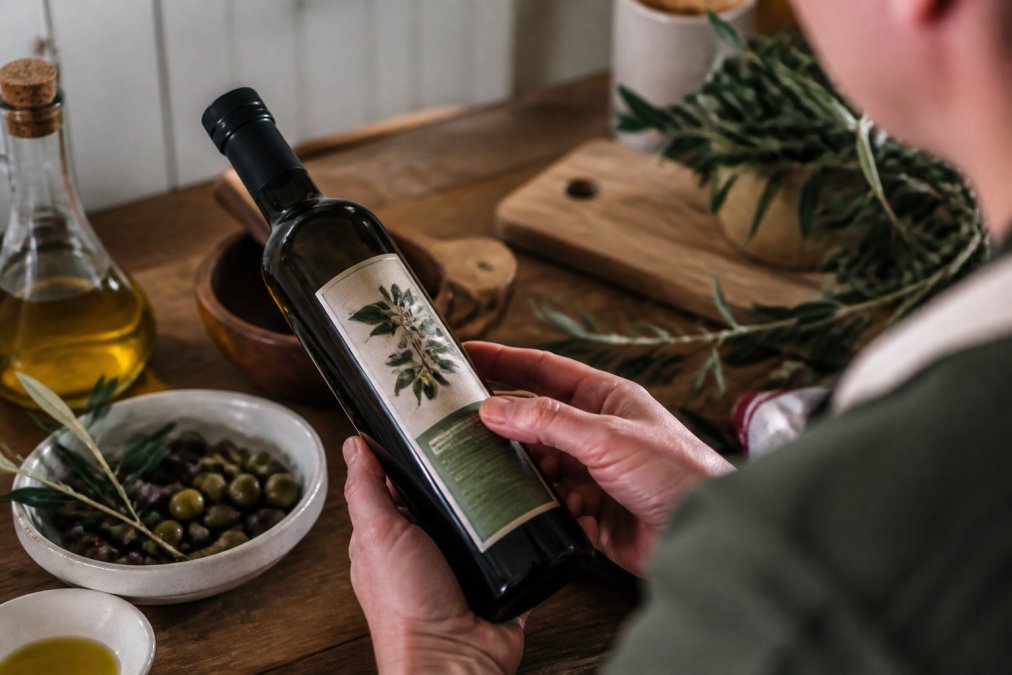
Look for the origin statement next. A label that says "packed in Australia" tells you nothing about where the olives were grown. Genuine producers name their groves. According to the Australian Competition and Consumer Commission's guidance on food labelling, country of origin labelling must be accurate and not misleading, but the rules still allow significant leeway in how prominently that information appears. For example, a product can legally say "Product of Australia" if it was merely bottled here, even if the olives were imported from another country. The ACCC requires that such claims not be misleading, but the onus is on the consumer to notice the fine print. A more specific statement like "Grown and cold-pressed in the Clare Valley, South Australia" is what a genuinely transparent producer will print.
Finally, check who actually produced the oil. Many supermarket brands buy bulk oil from multiple countries and blend it. That is not inherently bad, but it is the opposite of transparency. A single-estate or single-producer statement means one entity controlled the fruit from tree to bottle. Look for the words "single estate" or "estate grown", these are not regulated terms in Australia, so they should be backed by a named property or region. If the label lists an importer or distributor as the responsible entity, you are likely buying a blend.
A practical trick used by experienced buyers is to look for the batch code. A transparent producer prints a code that ties the bottle to a specific pressing. If that code is absent, or if the label uses the same code across multiple vintages, the producer is not tracking their own stock, which means they cannot guarantee freshness. Batch codes are not regulated, but their presence is a strong signal of internal quality control.
Olive Oil Harvest Date Importance: The Freshness Marker
Harvest date matters more than any other single factor in olive oil quality. Extra virgin olive oil is freshly pressed fruit juice, and like all fresh juice, it degrades from the moment it is made. Research on olive oil freshness and polyphenol stability shows that polyphenol content declines measurably over time, which means an old bottle of "premium" oil can deliver a fraction of the antioxidants a fresh bottle provides.
The olive oil harvest date importance comes down to two numbers: the month the fruit was picked and the number of months since pressing. In the Southern Hemisphere, harvest runs from late autumn into winter, typically April through July. Northern Hemisphere harvests occur roughly six months later. A transparent producer tells you which harvest your bottle came from, not just a vague vintage.
A common mistake is treating the vintage year like wine, assuming a 2025 oil is current in 2026. In reality, oil from the 2025 Southern Hemisphere harvest was pressed around May 2025, making it over a year old by mid-2026. The best practice is to buy oil from the most recent harvest available, which is why seasonal producers deliver twice yearly.
Australian Extra Virgin Olive Oil Standards Explained
Australia has some of the strongest olive oil standards in the world, which is good news for local buyers. The Australian Olive Association's certification program sets chemical and sensory benchmarks that exceed the international standard, including a maximum free acidity of 0.8% and mandatory tasting to confirm the oil is free of defects.
Understanding Australian extra virgin olive oil standards helps you separate certified product from generic imports. The Australian Certified Extra Virgin program requires random batch testing, not just a one-time lab report. When you see the certification mark, a third party has verified both the chemistry and the taste.
The chemical markers matter because they cannot be faked by marketing. Free acidity measures the breakdown of the oil's fatty acids; lower is better. Peroxide value tracks oxidation, while UV absorbance detects more advanced degradation. A producer who shares these numbers openly is demonstrating confidence in their product.
Sensory evaluation is just as important as chemistry. Certified oil must pass a tasting panel that checks for fruitiness, bitterness, and pungency while confirming the absence of defects like rancidity or mustiness. These organoleptic properties are what make fresh oil taste vibrant rather than flat.
Beyond the Label: Chemical Analysis and Certifications
Labels can be printed by anyone. Chemical analysis is harder to fake. A producer committed to transparent olive oil will share laboratory results showing free acidity, peroxide value, and polyphenol count, either on the bottle or on their website. Here is how to read a lab report like a buyer, not a chemist.
Free acidity is the first number to check. It measures the percentage of free fatty acids in the oil, which increases as the fruit degrades before pressing. The international standard for extra virgin olive oil is a maximum of 0.8%, but the Australian Certified Extra Virgin program sets a stricter benchmark. A genuinely fresh, well-made oil will often test below 0.3%.
Peroxide value measures primary oxidation, the first stage of rancidity. It is expressed in milliequivalents of oxygen per kilogram of oil (meq/kg). The upper limit for extra virgin is 20 meq/kg, but fresh oil typically tests below 10. Oxidation begins the moment the oil is exposed to oxygen during pressing, and it accelerates with heat and light exposure.
Polyphenol count is the most useful health marker. Polyphenols are the antioxidant compounds linked to the anti-inflammatory benefits of olive oil, and they are measured in milligrams per kilogram (mg/kg). A standard commercial extra virgin might have 100-200 mg/kg. A high-polyphenol oil, often labelled as such, will exceed 400 mg/kg. Some producers now print the polyphenol count directly on the bottle, and a few, like those using early-harvest fruit, will exceed 600 mg/kg.
Certifications add another layer of verification. Beyond the Australian certification, look for recognised competition results and independent testing regimes. Awards from accredited competitions involve blind tasting by trained panels, which provides an external check on quality claims. When Olio Nuovo earned a Gold Medal at the Royal Tasmanian Fine Food Awards and a Gold Award at the Dubai Olive Oil Competition, those results came from third-party sensory evaluation, not self-assessment.
Traceability technology is closing the remaining gaps. Some producers now use QR codes printed on the label that link to a batch-specific page showing the grove location, harvest date, pressing date, and full lab results. A few are experimenting with blockchain-based tracking, where each step of the supply chain is recorded in an immutable ledger. While blockchain is still rare, the QR code approach is becoming more common among premium producers.
A practical way to test a brand's commitment is to ask for the lab report directly. If they hesitate or offer only a summary, that is a signal. A producer who is proud of their chemistry will send you the full PDF without delay.
Sourcing Strategies: Direct-to-Consumer vs Retail
Where you buy olive oil is nearly as important as what you buy. Retail shelves reward products with long shelf lives and consistent pricing, which pushes producers toward older stock and blended oils.
When you buy directly from a producer, you can ask questions before you pay. What harvest is this bottle from? When was it pressed? Can you show me the lab results? A producer selling through their own channel can answer those questions immediately.
Seasonal variability is another factor that separates the two channels. Fresh olive oil is not a year-round constant product. Each harvest produces oil with slightly different flavour characteristics depending on rainfall, temperature, and picking time. Producers who embrace this variability sell in small batches tied to specific harvests.
This is where the twice-yearly delivery model makes sense. By syncing deliveries to the Southern and Northern Hemisphere harvests, a producer can always ship oil that is only weeks or months old. Olio Nuovo follows this approach, pressing within 24 hours of harvest and delivering unfiltered oil that retains its full polyphenol content and vibrant character.
Your Transparent Olive Oil Brand Checklist
Use this checklist when evaluating any olive oil brand, whether you are shopping online or standing in a specialty store.
- Harvest date printed on the bottle, not just a best-before date
- Specific region of origin named, not just "product of" a country
- Producer identified by name, not hidden behind an importer label
- Olive varieties listed where relevant
- Chemical analysis available: free acidity, peroxide value, polyphenols
- Third-party certification or accredited competition results
- Batch code that enables traceability to a specific grove or press
- Clear extraction method stated: cold-pressed and unfiltered where applicable
- Realistic shelf life communicated, acknowledging freshness decay
- Willingness to answer direct questions about harvest and processing
| Checklist Item | What to Look For | Why It Matters |
|---|---|---|
| Harvest date | Specific month and year | Confirms oil is fresh, not aged stock |
| Origin detail | Named region or estate | Verifies single-source claims |
| Lab results | Acidity and polyphenol figures | Proves quality chemically, not verbally |
| Certification | Independent tasting panel | External check on flavour quality |
| Batch traceability | Code tied to specific grove | Closes the gap between label and reality |
The brands that pass this checklist are not necessarily the most expensive, but they are uniformly the ones treating you as a knowledgeable buyer rather than a passive consumer.
Conclusion
Finding olive oil you can trust requires shifting from brand loyalty to evidence-based buying. The harvest date, the chemical analysis, and the producer's willingness to answer hard questions tell you more than any award sticker or heritage story ever will.
Olio Nuovo was built around this principle, pressing fruit within 24 hours of harvest and delivering unfiltered extra virgin olive oil packed with antioxidants and vitamins A, D, E, and K. Our twice-yearly harvest model means the oil in your pantry is never more than a few months old, and our Gold Medal results at the Royal Tasmanian Fine Food Awards and Dubai Olive Oil Competition provide the third-party verification that transparency demands.
Get started with Olio Nuovo and taste the difference that real freshness makes.
Frequently Asked Questions
How can I verify the harvest date on an olive oil bottle?
Look for a specific harvest date (day, month, year) printed on the label or back of the bottle. A transparent olive oil brand will state this clearly, not just a best-before date. If the harvest year is missing, contact the producer directly. Reputable brands, especially those selling premium extra virgin olive oil, can tell you the exact grove and pressing date. Be wary of bottles that only show a 'best by' date, as this can obscure how old the oil actually is.
What markers indicate transparency in olive oil production?
Key markers include a named grove or estate, specific olive varieties used, a precise harvest date, and details about extraction methods like 'cold-pressed'. Transparent producers also share third-party chemical analysis results, such as free acidity and polyphenol levels. Look for batch numbers or QR codes that trace the oil to its source. These details go beyond marketing claims and offer verifiable proof of the oil's origin and freshness.
Are there specific certifications for Australian olive oil?
Australia has its own rigorous standard for extra virgin olive oil, which sets limits for free acidity and requires sensory evaluation to confirm flavour. Producers can also seek certification through the Australian Olive Association to verify their oil meets these standards. This certification involves chemical and tasting panels. While not all transparent producers are certified, those who are provide an independent layer of verification for their quality claims.
How do I distinguish between marketing claims and genuine transparency?
Genuine transparency is specific and verifiable. A brand making real claims will provide a harvest date, not just a year; name the olive varieties; and offer details on the grove's location. Look for published chemical analysis results or independent awards. If a brand only uses vague terms like 'premium' or 'artisan' without specifics, treat those as marketing. Ask direct questions about sourcing and production; a transparent producer will answer them clearly.
This guide was published by Olio Nuovo, an Australian producer of award-winning, unfiltered extra virgin olive oil pressed within 24 hours of harvest.
